Skip to content




When you look at full-arch dental implants, you want more than a fast fix. You want strength, comfort, and support that lasts for years. That is why many people compare 3 on 6 and All-on-4 before they move forward.
If you want stronger long-term stability with more even bite support, 3 on 6 often offers an advantage over All-on-4 because it uses more implants and spreads pressure across separate bridges.
All-on-4 can still work well, especially if you have bone loss or want a simpler plan. Your bone health, bite force, and goals all shape which option fits you best.
You deserve to understand how each system handles daily chewing, long-term wear, and possible implant failure. When you know the real differences, you can choose with confidence and avoid costly problems later.
Key Takeaways
- 3 on 6 often provides greater long-term stability by spreading force across more implants.
- All-on-4 may suit you if you have limited bone or want a simpler approach.
- Your bone health, bite strength, and goals should guide your final choice.
Direct Comparison: 3 on 6 vs All-on-4 for Full-Arch Stability
When you compare 3 on 6 and All-on-4, you look at implant count, bridge design, and how each system handles daily biting forces. These details affect your stability and support, chewing function, and long-term maintenance.
Key Structural Differences
The main difference starts with implant count and layout.
With all-on-4, your dentist places four implants to support a single full-arch bridge. The entire arch depends on those four posts.
If one implant fails, the stability of the full-arch implant can drop quickly because everything connects as one unit.
A 3 on 6 dental implant system uses six implants, placed in pairs. Each pair supports a separate fixed bridge, usually three bridges per arch. This design spreads support across more implants.
You can see how providers describe these differences in layout and support in this overview of dental implants.
More implants do not always mean better results. However, six implants can give you added structural backup if one implant has a problem.
Force Distribution and Bite Alignment
Your bite creates pressure every time you chew. How a system handles that pressure affects long-term stability.
With all on 4, four implants carry the load of a full-arch bridge. The angled placement of the back implants helps use available bone. Still, all biting force transfers through just four anchor points.
In a 3 on 6 dental implants setup, six implants divide that force across three fixed bridges. This split can reduce stress on each implant.
Some clinicians note that dividing the arch into sections may improve how force spreads during chewing.
Better force distribution can support bite alignment over time. However, your bone quality, implant placement, and oral habits also play a major role.
Bridge and Prosthetic Design
The prosthetic design changes how your restoration feels and functions.
All-on-4 uses one full-arch bridge that spans the entire jaw. This single piece attaches to four implants. Cleaning often focuses on the space under one connected bridge.
The 3 on 6 approach uses three separate bridges. Each bridge connects to a pair of implants. This bridge design can make the teeth feel closer to natural segments, rather than one solid block.
However, multiple fixed bridges can create more small contact areas. That may require careful brushing and flossing around each section.
When you choose between full-arch implants, you should weigh how the bridge design fits your daily routine, comfort, and long-term care plan.
Implant Placement, Bone Factors, and Candidate Suitability
Your bone structure plays a direct role in how well a full-arch implant treatment holds up over time. The number of implants, how they are angled, and your bone quality all affect stability and long-term success.
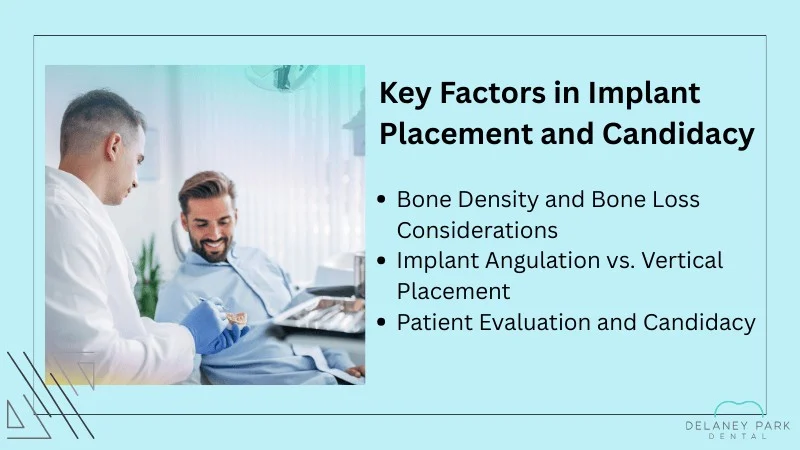
Bone Density and Bone Loss Considerations
Your bone density and bone quality decide how well implants can anchor in your jaw. Strong, dense bone supports faster and more predictable osseointegration, which is the process where bone bonds to the implant.
If you have mild to moderate bone loss, all-on-4 dental implants can often work without a bone graft. This method uses four implants to support a full arch and may reduce the need for added procedures.
Three-on-six usually places six implants in a more vertical position. Because of this, you often need enough bone height and width in the back of your jaw.
If bone loss is severe, you may need a bone graft before implant placement.
Your dentist will check bone levels with 3D scans to see if your jaw can support implants safely.
Implant Angulation vs. Vertical Placement
Implant placement differs in design and purpose.
All-on-4 dental implants often use two straight implants in the front and two angled implants in the back. Angling helps avoid the sinus in the upper jaw or the nerve in the lower jaw.
It also increases contact with available bone.
Three-on-six uses pairs of vertical implants to support three bridges. These implants usually sit straight up and down. This setup spreads chewing force across more implants, which can improve load balance.
A long-term study that followed patients for 3 to 13 years found no major difference in survival rates between four and six implants in most cases.
Your anatomy often decides which approach fits best.
Patient Evaluation and Candidacy
You need a full exam before starting treatment. Your dentist will review your medical history, check for gum disease, and measure bone density with imaging.
Key factors include:
- Amount of bone loss
- Smoking habits
- Teeth grinding (bruxism)
- Opposing natural teeth
- General health conditions
Some patients qualify for All-on-4 even with reduced bone, while others benefit from six implants for added support.
If you have extensive tooth loss and want fixed teeth that stay in place, both systems can work. The right choice depends on how much bone you have and how much support your bite requires.
Long-Term Stability and Maintenance Considerations
Your long-term results depend on how well the implants handle bite forces, how durable the bridge stays, and how easy it is to keep everything clean. You also need to know what happens if a problem develops years later.
Implant Stability Over Time
Implant stability depends on how biting forces spread across the jaw. In an All-on-4 full-arch restoration, four implants support one fixed bridge. This design works well, but the entire arch relies on those four anchors.
If one implant fails, the whole bridge may need repair or replacement. That risk matters if you grind your teeth or have strong bite pressure.
With 3 on 6 dental implants, three implants support each bridge of six teeth. This setup spreads force across multiple sections instead of one long prosthesis.
Some clinicians note that dividing the arch into smaller bridges can improve load distribution.
You should also consider bone quality. Lower bone density may require careful planning to protect implant stability over time.
Longevity and Durability of Restorations
Both options can last many years when placed correctly and maintained well. The materials used for the bridge, such as zirconia or acrylic over titanium, also affect durability.
All-on-4 uses one full-arch prosthesis. If it chips or cracks, your dentist often removes the entire bridge for repair. That process may leave you without teeth for a short time.
In a 3 on 6 design, separate bridges sit on groups of implants. If damage occurs, your dentist may repair or replace only one section. This approach can reduce cost and treatment time in some cases.
You should ask about:
- Type of framework material
- Warranty offered
- Expected lifespan with proper care
- Impact of immediate function on healing
Immediate function means you receive temporary teeth the same day. While convenient, it places early stress on implants, so your provider must control your bite carefully.
Oral Hygiene and Maintenance Needs

Long-term maintenance plays a major role in implant success. Even though dental implants do not decay, the surrounding gum tissue can become inflamed.
All-on-4 designs create a single bridge that spans the full arch. Some clinicians report that one continuous prosthesis can be easier to clean because you focus on one unit rather than multiple segments.
However, you still need daily care:
- Use a water flosser
- Clean under the bridge with special floss
- Attend professional cleanings every 3–6 months
The 3 on 6 system may create more contact points between bridges. That design can require extra time with floss threaders or small brushes.
If you struggled with cleaning a removable denture, you may find a fixed option easier. Still, fixed does not mean maintenance free.
Handling Potential Complications
Complications can include implant loosening, bone loss, fractured screws, or gum inflammation. Your response time matters. Early treatment often prevents bigger problems.
With All-on-4, one failed implant can affect the stability of the entire arch. Your dentist may need to remove the bridge and place a new implant before restoring function.
With 3 on 6, a problem in one section may stay limited to that bridge. Your provider can sometimes repair that area without disturbing the rest of your full-arch restoration.
You should also plan for:
- Night guards if you grind your teeth
- Routine X-rays to monitor bone levels
- Regular screw tightening checks
Long-term stability depends on your daily oral hygiene habits and your commitment to follow-up care.
When you treat your implants like natural teeth and attend regular visits, you support their performance for many years.
Aesthetics, Comfort, and Daily Experience
Your new teeth should look natural, feel secure, and work well every day. The design of the bridge, the materials used, and how the implants support it all affect how you smile, speak, and eat.
Smile Appearance and Gum Material
When you compare 3-on-6 dental implants to All-on-4, the look of the final bridge matters just as much as stability.
With 3-on-6, your dentist places six implants and connects them with three separate dental bridges. These bridges often sit closer to your natural gum line.
In many cases, you need little or no artificial gum material.
All-on-4 usually supports one full-arch tooth replacement prosthesis. If you have bone loss, the bridge may include pink artificial gum material to restore your smile line and lip support.
Key differences you may notice:
- 3-on-6: More tooth-only appearance when bone levels allow
- All-on-4: May use more pink acrylic or zirconia to replace lost tissue
- Smile line impact: High smile lines may reveal gum material if not carefully designed
If you show a lot of gum when you smile, precise planning of the smile line becomes very important.
Comfort and Natural Feel
Comfort depends on how the bridge fits and how pressure spreads across the implants.
With 3-on-6 dental implants, six implants support three bridges. This setup can spread bite force across more points. Some patients say it feels closer to having separate sections of teeth instead of one large piece.
All-on-4 uses four implants to support one full bridge. When placed well, it feels stable and fixed. You do not remove it at night.
You may notice differences in:
- Pressure distribution
- Thickness of the bridge base
- Amount of artificial gum material against your tissue
A thinner design with less bulk often feels more natural to your tongue. However, your bone shape and tissue support will guide what is possible.
Speech and Chewing Function
Clear speech depends on tongue space and tooth position.
With 3-on-6, the separate dental bridges may allow a more natural contour along the palate, especially in the upper arch. This can help your tongue adapt faster.
All-on-4 bridges sometimes cover more area, especially if they replace lost gum tissue. If the prosthesis feels bulky at first, you may notice slight changes in sounds like “S” or “T.” Most patients adjust within weeks.
For chewing, both options support a fixed full-arch tooth replacement. The key factors include:
- Implant number and placement
- Bridge material
- Bite alignment
If you grind or clench, added implant support in a 3-on-6 design may help distribute force. Proper bite adjustment plays a bigger role than implant count alone in how strong and comfortable your bite feels.
Cost, Accessibility, and Additional Options
Your choice often comes down to budget, bone health, and long-term goals. You also need to weigh how many implants you want and how complex your full-arch treatment will be.
Dental Implants Cost Comparison
You will see a clear price gap between options. The cost for 3 on 6 dental implants usually ranges from $22,000 to $28,000 per arch, or about $44,000 to $56,000 for a full mouth.
All on 4 dental implants often cost less because they use four implants and one large bridge. Fewer implants can mean lower surgical and lab fees.
However, lower cost does not always mean better long-term value. With six implants supporting three bridges, 3 on 6 may spread bite pressure more evenly. That design can reduce stress on each implant.
You should also ask about:
- CT scans and imaging fees
- Sedation costs
- Temporary teeth
- Follow-up visits and maintenance
Clear pricing helps you plan without surprises.
All-on-6 and Alternative Full-Arch Treatments
You may also hear about all-on-6 as a middle option. This approach uses six implants to support one full-arch bridge.
Some providers explain the key differences between All-on-4 vs All-on-6 full-arch solutions, including bone needs and stability. All-on-6 can offer more support than All-on-4 while keeping a single bridge design.
Here is a simple comparison:
| Option | Implants per Arch | Bridge Design |
| All-on-4 | 4 | One full bridge |
| All-on-6 | 6 | One full bridge |
| 3 on 6 | 6 | Three separate bridges |
You may qualify for one option over another based on bone density, gum health, and how long you have been missing teeth. Some patients need bone grafting before any full-arch treatment.
Planning Your Treatment Journey
You should start with a full exam and 3D imaging. This step shows how much bone you have and where implants can go safely.
Ask your dentist to explain:
- How many implants you truly need
- The material used for your final teeth
- Expected healing time
- Long-term maintenance steps
You also need to think about access. Not every office offers 3 on 6 or all-on-6. Some focus mainly on all on 4 dental implants.
Choose a provider who explains risks, costs, and timelines in clear terms. When you understand each phase of treatment, you can move forward with more confidence and fewer unknowns.
Frequently Asked Questions
You want clear facts before you choose a full-arch system. These answers focus on stability, maintenance, cost, risks, lifespan, and success rates so you can compare your options with confidence.
What factors contribute to the long-term stability of 3 on 6 dental implants compared to All-on-4?
Stability depends on how many implants support your bridge and how well they spread out bite force. The 3 on 6 method uses multiple implants placed in sections, which can spread pressure across more points.
All-on-4 uses four implants to hold a full arch. This design works well for many patients, but the entire bridge relies on just four posts. Some dentists note that if one implant fails, it can affect the whole arch.
Your bone quality also matters. Strong bone and careful placement improve long-term support in either system.
Are there any significant differences in maintenance between the 3 on 6 and All-on-4 dental implant procedures?
Maintenance depends on how the teeth attach to the implants. All-on-4 usually supports one full bridge, so you clean under a single connected arch.
The 3 on 6 system often uses separate bridges. This setup may allow cleaning between sections, which can feel more like caring for natural teeth.
Both options require daily brushing, flossing tools made for implants, and regular dental visits. Skipping cleanings raises your risk of gum problems around the implants.
How do the costs of 3 on 6 dental implants compare with All-on-4 for full-arch restoration?
Cost often reflects the number of implants placed. All-on-4 uses four implants per arch, which can lower surgical time and material costs.
The 3 on 6 method may use more implants, which can increase the total fee. However, design and lab work also affect the final price.
Clinics often explain that patients weigh price against stability and design features. Your dentist should give you a written treatment plan with clear numbers.
What are the common complications associated with 3 on 6 implant systems and All-on-4?
Both systems share similar risks. These include infection around the implant, bone loss, screw loosening, and implant failure.
With All-on-4, the full arch depends on four implants. If one fails, the bridge may need repair or replacement.
With 3 on 6, problems may affect one section instead of the entire arch, depending on the design. Good hygiene and follow-up visits lower your risk in both cases.
Can you explain the longevity expectations of the 3 on 6 dental implants versus the All-on-4 system?
Dental implants can last many years when you care for them well. The titanium posts often remain stable for decades if your bone stays healthy.
Some clinicians believe extra implants can improve force distribution, which may support long-term durability.
Your habits play a big role. Smoking, teeth grinding, and poor cleaning can shorten the life of either system.
What is the expected success rate for patients choosing All-on-4 dental implants over the 3 on 6 method?
All-on-4 has a strong track record when dentists select patients carefully. Many practices report high success rates when patients have enough bone and follow aftercare rules.
The 3 on 6 method also shows favorable outcomes when placed by trained surgeons. Success depends more on your bone health, medical history, and daily care than on the brand name of the system.
Ask your provider about their personal success rates and how many full-arch cases they complete each year. That data gives you a clearer picture than marketing claims.