Skip to content




Veneers can transform your smile, but they don’t last forever.
Whether you got veneers years ago or you’re considering them now, understanding when they need replacement helps you plan ahead and protect your investment.
Porcelain veneers typically last 10 to 15 years, while composite veneers usually need replacement after 5 to 7 years.
The cost to replace them ranges from $800 to $2,500 per tooth, depending on the material you choose and where you live.
Signs that your veneers need replacement include visible chips or cracks, discoloration around the edges, gum recession that exposes the veneer margin, or a loose feeling when you chew.
The good news is that replacing veneers is often simpler than getting them the first time. Your teeth are already prepared, so the process focuses on removing the old veneers and bonding new ones.
Understanding what affects lifespan and veneer replacement cost helps you make smart decisions about your dental care.
Key Takeaways
- Porcelain veneers last 10 to 15 years, while composite veneers last 5 to 7 years before needing replacement
- Replacement costs between $800 and $2,500 per tooth, depending on material type and location
- Proper care, including avoiding hard foods, wearing a night guard if you grind your teeth, and regular dental visits, extends veneer lifespan
When Do Veneers Need Replacement?
Dental veneers don’t last forever, but knowing when they need replacement helps you plan ahead. The timeline varies based on the type of veneers you have and how well you care for them.
How Often Do Veneers Need to Be Replaced?
Porcelain veneers typically last 10 to 20 years with proper care. Some patients keep their porcelain veneers looking great for two decades before needing a replacement.
Composite veneers have a shorter lifespan. You can expect them to last about 5 to 7 years on average.
Your veneer longevity depends on several factors beyond just the material. Good oral hygiene habits make a big difference. Regular dental checkups help catch problems early.
Whether you grind your teeth at night also affects how long your veneers last. Using a night guard protects your investment if you have this habit.
The skill of your cosmetic dentist matters too. Well-made veneers that fit properly tend to last longer than poorly crafted ones.
Common Signs That Veneers Need Replacing
Chips or cracks in your veneers are clear signs you need a replacement. Even small cracks can turn into bigger problems if you ignore them.
Pay attention if your veneers feel loose or bulky. A shifting veneer might wiggle slightly or feel unnatural when you eat.
Discoloration around the edges is another warning sign. The bonding material can darken or stain over time, which affects how your smile looks.
Gum recession creates gaps that expose the edges of your veneers. This can trap food and bacteria, leading to other dental problems.
Pain or discomfort when chewing means something is wrong underneath the surface. Tooth decay can develop under veneers if you don’t maintain good oral hygiene.
Differences Between Porcelain and Composite Veneer Lifespan
Porcelain veneers cost more upfront but offer better durability. They resist stains better than composite materials and keep their appearance longer.
Composite veneers are budget-friendly and easier to repair. However, they break down sooner and need replacement more often.
The material difference affects your long-term costs. Composite veneers might seem cheaper at first, but frequent replacements add up over time.
Porcelain is a good choice if you want a long-term solution with minimal maintenance. Composite is a good choice for younger patients or anyone who wants same-day treatment for minor cosmetic issues.
Your lifestyle also plays a role in which type lasts longer. If you drink coffee or red wine regularly, porcelain holds up better against staining.
Not sure if your veneers are past their prime? Call us today for a quick assessment, we’ll tell you honestly if it’s time for a refresh or if they’ve got years left.
Reasons Veneers Require Replacement
Veneers don’t last forever, and several factors can necessitate replacement. Physical damage, color changes, and problems with how they fit against your gums are the most common reasons you’ll need new veneers.
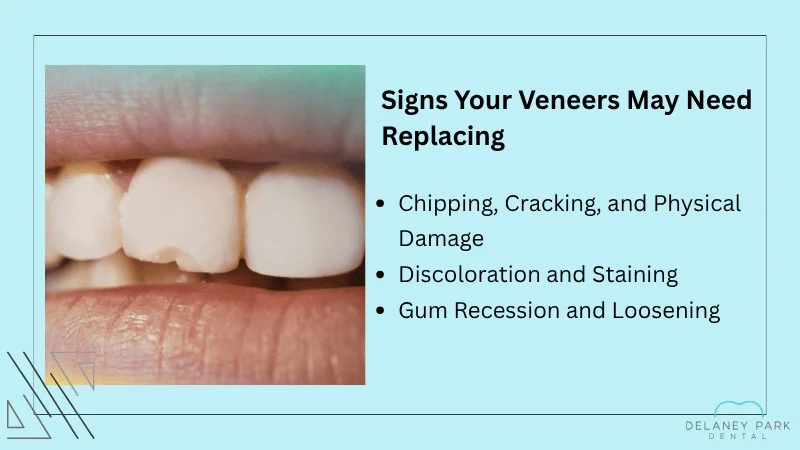
Chipping, Cracking, and Physical Damage
Physical damage is one of the main reasons veneers need replacement. Biting into hard foods like ice, nuts, or hard candy can chip or crack your veneers.
Using your teeth to open packages or bite your nails puts extra stress on them, too.
Accidents and sports injuries can also damage veneers. Even a minor fall or impact to your face might crack a veneer that seemed perfectly fine before.
Bruxism, or teeth grinding, causes serious wear over time. If you grind your teeth at night, the constant pressure slowly breaks down your veneers.
This is especially true if you don’t wear a night guard to protect them while you sleep.
Discoloration and Staining
While porcelain veneers resist stains well, the edges where they meet your natural teeth can develop discoloration over the years.
The bonding material that holds your veneers in place can darken or yellow with age.
Composite veneers stain more easily than porcelain ones. Coffee, red wine, tea, and dark berries are common culprits that cause color changes. Smoking also leads to faster discoloration.
The tooth structure under your veneer might darken if decay develops. This shows through as a shadow or dark spot that makes your veneer look off-color.
Gum Recession and Loosening
Gum recession exposes the edges of your veneers and creates visible gaps between your gums and veneers. These spaces trap food and bacteria, which can lead to more gum problems and tooth decay.
When gums recede, the line where your veneer meets your natural tooth becomes visible. This ruins the seamless look you want from veneers.
The bonding adhesive that holds veneers in place can weaken over time. Poor oral hygiene speeds up this process. You might notice your veneer feels loose or shifts slightly when you eat.
If the bonding fails completely, your veneer can fall off. This usually happens gradually, starting with a loose feeling before it actually detaches.
Factors That Influence Veneer Longevity
Several key factors determine how long your veneers will last, from the materials your cosmetic dentist uses to your daily habits.
Understanding these elements helps you protect your investment and get the most years from your smile transformation.
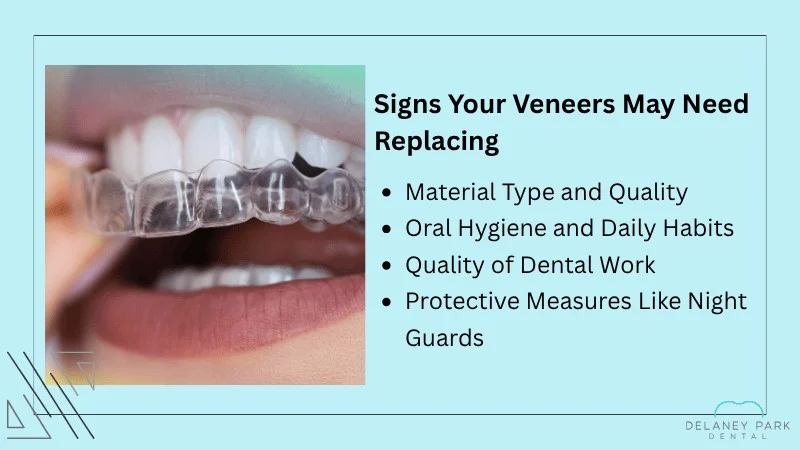
Material Type and Quality
The type of veneer you choose makes the biggest difference in how long they last. Porcelain veneers typically last 10 to 15 years with proper care, and many patients enjoy them for 20 years or longer.
The ceramic material resists staining and chipping better than other options.
Composite veneers are more affordable but don’t last as long. Composite veneers generally last 5 to 7 years before needing replacement. The resin material is softer than porcelain and picks up stains more easily.
High-quality materials from experienced cosmetic dentistry providers also matter. Premium porcelain and expert craftsmanship often help veneers exceed their expected lifespan.
Oral Hygiene and Daily Habits
Your oral hygiene routine directly affects the durability of your veneers. Brushing twice daily with non-abrasive toothpaste and flossing every day protects both your veneers and the teeth underneath them.
Poor cleaning habits can lead to decay around the veneer edges, potentially requiring early replacement.
Your lifestyle choices matter too. Limiting coffee, red wine, tea, and tobacco helps prevent discoloration around the bonding material. While porcelain resists stains well, the edges can still change color over time.
Avoid using your teeth as tools to open packages or bite hard objects like ice and hard candy. These habits put too much pressure on veneers and greatly increase your risk of chips and cracks.
Regular dental check-ups let your dentist spot problems early before they become serious.
Quality of Dental Work
The skill of your cosmetic dentist plays a major role in how long your veneers last. Veneers placed by experienced cosmetic dentists using proper techniques and quality materials consistently last longer than budget options.
Proper bonding and precise fitting help veneers stay secure and comfortable for years.
Your bite alignment also affects veneer lifespan. When your teeth line up correctly, chewing forces spread evenly across all teeth.
Misaligned bites can put uneven stress on certain veneers, potentially shortening how long they last.
Protective Measures Like Night Guards
If you grind or clench your teeth at night, a night guard is essential for protecting your veneers. Teeth grinding puts enormous pressure on veneers and can cause chips, cracks, or complete breaks.
A custom night guard from your dentist cushions this force and helps your veneers reach their full lifespan.
You should also wear a mouthguard during sports and physical activities. While veneers are strong, facial trauma or impacts can crack or dislodge them. Taking this simple step protects your smile during high-risk activities.
Wondering what your smile could look like with new veneers? Stop by our Delaney Park office and let’s explore your options, no pressure, just possibilities.
The Veneer Replacement Process
Replacing veneers involves several careful steps to ensure your new smile looks natural and lasts for years.
Your dentist will evaluate your current veneers, remove them safely, prepare your teeth, and bond your new custom veneers in place.
Evaluation and Planning
Your dentist starts by examining your existing dental veneers to understand why they need replacement. They’ll look for damage, discoloration, or gaps between the veneer and your gums.
This evaluation includes taking digital x-rays and scans to see what’s underneath your current veneers.
The process of replacing veneers differs from initial placement because your dentist needs to assess the tooth structure beneath the existing veneers.
They can’t see the exact condition until removal begins. You’ll discuss your goals for your new smile during this phase.
Your dentist will create a personalized treatment plan. This includes choosing the right shade, shape, and size for your new veneers. Digital tools help preview how your new smile will look before any work begins.
Removal of Old Veneers
Your dentist carefully removes your old veneers using specialized tools. They work gently to preserve as much healthy tooth structure as possible.
The removal process requires precision to avoid damaging your natural teeth underneath.
Once the old veneers come off, your dentist cleans the tooth surface thoroughly. They remove any remaining adhesive and smooth out the edges.
This step is important because it creates a clean foundation for your new veneers.
The removal process differs from removing dental crowns, which cover the entire tooth. Veneers only bond to the front surface, making removal less invasive.
Preparation and Temporary Veneers
After removal, your dentist may need to reshape your teeth slightly. This ensures your new custom veneers will fit properly and look natural.
The amount of preparation depends on the condition of your teeth and the old veneers.
You’ll receive temporary veneers to wear while your permanent ones are being made. These protect your teeth and maintain your appearance for the next few weeks.
Temporary veneers aren’t as strong as permanent ones, so you’ll need to be careful with hard foods.
The temporary phase typically lasts two to three weeks. During this time, a dental lab crafts your new veneers to match your desired specifications.
Placement of New Custom Veneers
When your custom veneers arrive from the lab, you’ll return for the final appointment. Your dentist first checks the fit, shape, and color of each veneer.
They make any necessary adjustments before permanently bonding them.
Your teeth are cleaned and slightly etched to help the bonding material stick better. A special cement attaches each veneer to your tooth surface. Your dentist uses a light to harden the adhesive quickly.
After placement, your dentist trims any excess material and polishes your new veneers. They check your bite to ensure everything feels comfortable.
You’ll leave with a refreshed smile that should last 10 to 15 years with proper care.
Cost of Replacing Veneers
Replacing veneers involves paying for removal, tooth preparation, fabrication, and placement. The cost of veneers depends mainly on the material you choose and how many teeth need treatment.
Porcelain Veneer Replacement Cost
Porcelain veneers typically cost between $800 and $2,800 per tooth when replacements are needed. The average price sits around $1,600 per tooth for most patients.
Your total cost includes several components. You’ll pay $100 to $600 for removal of existing veneers, plus $150 to $700 per tooth for preparation and bonding. Lab fees and materials add another $500 to $2,000 per tooth.
For multiple teeth, expect to pay more overall but sometimes less per tooth. A four-tooth replacement with porcelain veneers runs from about $6,400 to $11,200.
If you’re replacing six teeth with premium porcelain and custom shading, your total could range from $9,900 to $22,000.
Porcelain veneers cost more upfront than composite options. However, they last 10 to 20 years with proper care, which can make them more cost-effective over time.
Composite Veneer Replacement Cost
Composite resin veneers offer a more budget-friendly option. These veneers cost between $250 and $1,200 per tooth, with an average of around $600.
The lower price comes with trade-offs. Composite veneers may need replacement after just 5 to 7 years, whereas porcelain veneers have a longer lifespan. This means you’ll likely replace them more often during your lifetime.
Composite veneers are made chairside in a single visit. This faster turnaround reduces lab fees and eliminates shipping costs.
You still pay for removal of old veneers and tooth preparation, but these fees tend to be lower than with porcelain.
For two teeth, you might spend $500 to $2,400 total. A six-tooth replacement could range from $1,500 to $7,200, depending on your dentist and location.
Ready to upgrade your smile? Skip the waiting room paperwork and complete our online form now. We’ll help you understand your veneer replacement costs and timeline from day one.
Cost Factors by Location and Dentist
Where you live significantly affects your veneer costs. Regional pricing differences can vary by 10 to 20 percent between urban and rural areas.
Northeast cities typically charge more than Midwest locations, while Southern states often fall in between. Major urban centers show prices roughly 5 to 15 percent higher than national averages.
In California, porcelain veneers range from $20,000 to $70,000 for full-mouth treatment due to high demand and high living costs.
Your dentist’s experience and practice overhead also influence pricing. Specialists in cosmetic dentistry may charge premium rates for advanced techniques and materials.
Some dentists offer bundled rates when you’re replacing multiple veneers at once, which can reduce your per-tooth cost.
Financing and Payment Options
Many dental practices offer financing options to make veneer replacement more manageable. You can spread payments over several months or years rather than paying everything up front.
Third-party healthcare financing companies provide payment plans specifically for dental work. These plans often feature low or zero interest rates if you pay within a promotional period.
Monthly payments vary based on the total cost and your repayment timeline.
Dental schools and teaching clinics sometimes provide lower-cost services under supervision. This option can save you money while still delivering quality results.
Insurance rarely covers cosmetic veneer replacement. However, if your veneers need replacement due to damage or decay, your plan might offer partial coverage.
Check with your insurance provider about what qualifies for reimbursement.
Maximizing the Lifespan of Your Veneers
Proper care can add years to your veneers through daily habits, smart food choices, and regular dental visits. Understanding how to protect your investment helps you avoid early replacement costs.
Best Practices for Veneer Care
Your oral hygiene routine plays a major role in how long your veneers last. Brush twice daily with non-abrasive toothpaste to avoid scratching the surface of your veneers.
Regular toothpaste with harsh abrasives can dull the shine over time.
Floss every day to keep your gums healthy and prevent decay around the edges where your veneers meet your natural teeth. Use a soft-bristled toothbrush and gentle circular motions.
If you grind your teeth at night, wear a custom night guard. Grinding puts serious pressure on veneers and can cause chips or cracks.
A night guard spreads out the force and protects your smile makeover from damage.
Avoid using your teeth as tools. Don’t open packages, bite your nails, or chew on pens. These habits can crack or chip even the strongest porcelain veneers.
Diet and Lifestyle Recommendations

Your food and drink choices affect how long your veneers stay bright and intact. Staining foods like coffee, red wine, tea, and dark berries can discolor composite veneers more easily than porcelain ones.
Hard foods require extra caution. Avoid biting directly into hard candy, ice, or crusty bread with your front teeth. Cut corn off the cob and slice apples into smaller pieces.
Acidic foods and drinks can weaken the bonding material over time. Limit sodas, citrus fruits, and vinegar-based dressings. Rinse your mouth with water after consuming acidic items.
Smoking not only stains veneers but also harms your gum health. Healthy gums are essential for keeping veneers stable and secure on your teeth.
The Role of Regular Dental Visits
Professional dental check-ups every six months help catch small problems before they become expensive repairs. Your dentist can spot early signs of wear, loosening, or decay around your veneers.
Professional cleanings remove plaque buildup that regular brushing misses. Your hygienist uses special tools safe for veneer care that won’t damage the surface.
During these visits, your dentist checks your bite alignment. Uneven pressure from a misaligned bite can cause premature wear or breakage.
Alternatives and Functional Benefits
Beyond appearance, veneers offer functional benefits that protect your teeth. They strengthen worn or weakened enamel and can correct minor alignment issues without braces.
Crowns might be better if you have severe damage or large fillings. They cover the entire tooth and provide more structural support.
Bonding costs less upfront but only lasts 3 to 5 years. Veneers require a bigger initial investment but deliver better long-term value with proper care.
Whitening treatments work on natural teeth but won’t change the color of veneers. If you want whiter teeth, do professional whitening before getting veneers so your dentist can match them to your desired shade.
Are your veneers showing their age? Come see us at Anchorage, AK, for seamless veneer replacements that look natural and fit your budget, right here in Delaney Park.
Frequently Asked Questions
Veneers typically last between 5 and 20 years, depending on the material, and replacement costs usually range from $900 to $2,500 per tooth. Proper care and regular dental visits can help you get the most out of your investment.
How long do dental veneers typically last before needing replacement?
Porcelain veneers typically last 10 to 15 years with proper care. They’re more durable and resist staining better than other options.
Composite veneers have a shorter lifespan. You can expect them to last about 5 to 7 years before they need replacement.
The quality of materials and your dentist’s skill level affect how long your veneers will last. Your daily habits play a big role too.
Can you share some common signs that indicate veneers might need to be replaced?
Chipping or cracking is one of the most obvious signs your veneers need attention. This damage often happens from grinding your teeth or biting hard objects.
Staining or discoloration can develop over time, especially with composite veneers. If your veneers look noticeably darker than they used to, it might be time for a replacement.
Gum recession can expose the edges of your veneers, creating an unnatural look. Looseness or detachment means you should see your dentist right away.
What could be the average cost range for replacing a single veneer?
Replacing a single veneer typically costs between $900 and $2,500 per tooth. The exact price depends on several factors.
The material you choose makes a big difference in cost. Porcelain veneers cost more than composite ones, but they also last longer.
Your location and your dentist’s experience level affect the final price. Dentists in larger cities or those with special training often charge more for their services.
Are there any maintenance tips to extend the life of my veneers?
Brush twice daily with a non-abrasive toothpaste and floss every day. This keeps your gums healthy and prevents decay around your veneers.
Avoid using your teeth as tools to open packages or bite your nails. These habits can chip or crack your veneers.
If you grind your teeth at night, wear a custom night guard to protect your veneers from damage. Regular dental checkups every six months let your dentist catch small problems before they become big ones.
Limit foods and drinks that stain, like coffee and red wine. Rinsing your mouth with water after consuming these helps protect composite veneers.
Does dental insurance usually cover the cost of veneer replacement?
Most dental insurance plans consider veneers a cosmetic procedure. This means they typically don’t cover the initial placement or routine replacement.
Your insurance might cover part of the cost if the veneer breaks due to an accident or injury. You’ll need to check your specific policy details to know what’s covered.
Many dental offices offer payment plans or financing options. This can make the cost of replacement more manageable by spreading payments over time.
What is the procedure involved in replacing old veneers with new ones?
Your dentist will start with an evaluation and take X-rays. This helps them check the health of your natural teeth underneath the veneers.
The old veneers are carefully removed to protect your natural tooth structure. Your dentist reshapes your teeth slightly and takes impressions for your new custom veneers.
You might wear temporary veneers while your permanent ones are being made. Once ready, your dentist bonds the new veneers to your teeth for a natural look and comfortable fit.
The whole process usually takes a few visits. Local anesthesia keeps you comfortable during the procedure, though you might feel some mild sensitivity afterward.