Skip to content




If you are over 60 and thinking about dental implants in Anchorage, you may wonder what really changes with age.
Your jawbone can lose some density over time, and certain health conditions can affect healing. That does not mean implants are off the table.
You can still qualify for dental implants after 60, but your bone density, gum health, and overall health play a bigger role in long‑term success.
During your implant consultation, your dentist will check bone levels and review your medical history. Careful implant treatment planning helps match the right approach to your needs.
Modern implant therapy can adapt to thinner or softer bone. With the right plan, many adults can opt for dental implants after 60 in Anchorage for stable teeth that support daily comfort and chewing.
Key Takeaways
- Age alone does not prevent you from getting dental implants.
- Bone density and health guide implant treatment planning and healing.
- Careful evaluation and modern techniques support long-term stability.
Table of Content
- How Age and Bone Density Influence Dental Implant Outcomes
- Implant Placement Techniques and Adapting to Older Bone
- Managing Reduced Bone and Medical Challenges
- Treatment Planning, Recovery, and Success in Seniors
- Implant-Retained Dentures and Long-Term Outcomes
- Frequently Asked Questions
How Age and Bone Density Influence Dental Implant Outcomes
After 60, your bone structure and overall health play a direct role in how well dental implants heal and stay stable.
Changes in bone density, hormone levels, and jawbone shape can affect your treatment plan and long‑term results.
Age Versus Overall Health in Implant Success
Your age alone does not decide whether implants will work. Your overall health matters more than the number of birthdays you have had.
If you manage chronic conditions like diabetes, keep your gums healthy, and avoid smoking, you often heal just as well as younger adults.
Research on the impact of age-related bone density variations on dental implant outcomes shows that age can influence stability, but health and bone quality play a larger role.
You also need strong immune function and good oral hygiene. Untreated periodontal disease can damage the supporting bone around an implant.
Regular dental cleanings and home care protect your jawbone and reduce inflammation.
When you stay active, eat well, and follow your dentist’s advice, you improve your odds of long-term implant success.
Bone Density Changes After 60
After 60, your bone density often decreases. This loss can range from mild osteopenia to more advanced osteoporosis.
Lower bone density means your jawbone may not grip the implant as tightly at first. Primary stability depends on bone quality, surgical technique, and implant design.
Your body also needs enough vitamin D and balanced parathyroid hormone (PTH) levels to maintain healthy bone. Low vitamin D can reduce calcium absorption, which weakens bone over time.
The good news is that many people with osteoporosis still receive implants successfully.
A review on the impact of osteoporosis on dental implant survival and failure found that implants can remain stable with proper planning and follow-up care.
Your dentist may recommend bone grafting or longer healing times if your bone density is low.
Alveolar Bone Remodeling and Jawbone Health
Your alveolar bone is the part of your jaw that holds your teeth. When you lose a tooth, this bone begins to shrink.
This process, called bone remodeling, speeds up in the first year after tooth loss. Over time, your jawbone can lose both height and width. That loss can limit implant placement if you wait too long.
Dental implants for seniors help slow further bone loss because they transfer chewing forces into the jaw. This stimulation supports jawbone health and reduces ongoing shrinkage.
If you have worn dentures for many years, your alveolar bone may be thinner. In these cases, your dentist may suggest bone grafting to rebuild volume and create a stable base for implants.
Unique Considerations for Postmenopausal Women
If you are a postmenopausal woman, hormonal changes can affect your bone health. Lower estrogen levels increase bone breakdown and raise the risk of osteoporosis.
Studies that looked at clinical outcomes in postmenopausal women receiving implants show that many women still achieve good implant survival.
However, careful monitoring of bone mineral density and bone markers can help guide treatment.
You should discuss any medications you take for osteoporosis. Some drugs affect bone remodeling and healing speed.
Calcium intake, vitamin D levels, and regular weight-bearing exercise all support stronger bone. When you manage these factors, you give your implants a more stable foundation in the years ahead.
Implant Placement Techniques and Adapting to Older Bone
As you age, bone density and healing speed can change. Your surgeon adjusts implant placement, testing methods, and implant design to improve implant stability and reduce implant failure.
Assessing Bone Quality With CBCT and RFA

Before implant placement, your dentist studies your bone in detail. A CBCT scan creates a 3D image of your jaw so your provider can measure bone height, width, and density.
This matters because lower bone density can affect implant stability.
Research on the impact of age-related bone density variations on dental implant outcomes shows that adults ages 66–80 may face higher early implant failure rates when bone quality is reduced.
During surgery, your provider may use resonance frequency analysis (RFA). RFA gives an ISQ (Implant Stability Quotient) score, which helps measure how stable the implant is in your bone.
Higher ISQ values suggest better primary stability. If your ISQ score is low, your dentist may delay loading the implant to protect osseointegration.
Optimizing Osseointegration in Seniors
Osseointegration means your bone grows and bonds to the implant surface. After 60, this process may take longer, especially if you have osteoporosis or certain medical conditions.
A review on the impact of osteoporosis on dental implant survival and marginal bone loss shows mixed findings, but careful planning improves outcomes.
Your dentist may choose a longer healing period before attaching the crown.
To support osseointegration, your provider may:
- Use implants with roughened or treated surfaces
- Place implants with precise torque control
- Recommend a soft diet during early healing
- Monitor ISQ scores at follow-up visits
Good oral hygiene also plays a key role. Plaque control reduces inflammation around the implant and protects long-term implant success rates.
Choosing the Right Implant System
Not all implant systems work the same way. Your dentist selects the implant length, diameter, and surface based on your bone density and jaw shape.
A prospective study on implant stability and marginal bone level changes over two years found that factors like bone density, implant length, and diameter affect stability and bone levels.
In softer bone, your provider may:
- Choose a wider or longer implant when possible
- Use a tapered design for better grip
- Adjust drilling speed to preserve bone
These choices improve primary stability and lower the risk of implant failure. Careful implant placement helps protect surrounding bone and supports long-term success.
Zygomatic Implants for Severe Bone Loss
If you have severe upper jaw bone loss, traditional implants may not anchor securely. In these cases, your surgeon may recommend zygomatic implants.
Zygomatic implants anchor into the cheekbone, which has denser bone than the upper jaw. This approach can avoid extensive bone grafting.
Clinical data on dental implants in older adults shows that many seniors achieve strong survival rates when providers tailor treatment to their bone condition.
Zygomatic implants require advanced training and careful planning with CBCT imaging. When placed correctly, they can restore function and improve stability even in patients with significant bone loss.



Managing Reduced Bone and Medical Challenges
After 60, you may face lower bone density, past bone loss, or medications that affect healing. Careful planning, the right timing, and close follow‑up help you place implants safely and protect long‑term bone preservation.
When Bone Grafting Is Needed
You need enough bone height and width to hold an implant firmly. With age, bone mineral density often drops, and the jaw can shrink after tooth loss.
Research on age-related bone density loss and dental implant success shows that lower bone quality can raise the risk of early failure.
If your scan shows thin or soft bone, your dentist may suggest bone grafting. A bone graft adds volume where bone has worn away. This creates a stable base for the implant.
Common graft types include:
- Socket grafts after tooth removal
- Ridge augmentation to widen narrow bone
- Sinus lifts for upper back teeth
Healing can take several months. Your dentist will check stability before placing the implant to reduce marginal bone loss (MBL) later.
Bisphosphonates, Drug Holidays, and Implant Safety
If you take bisphosphonates for osteoporosis, your implant consultation must include a full medication review. These drugs slow bone breakdown, which lowers fracture risk. They can also affect how bone heals after surgery.
Management of osteoporosis often includes antiresorptive drugs such as bisphosphonates and denosumab, which may raise implant-related concerns.
Your dentist may speak with your physician about a possible drug holiday. This means stopping the medication for a short time before and after surgery. Not every patient needs this. The decision depends on:
- How long you have taken the drug
- Your fracture risk
- The dose and type of medication
Never stop medication on your own. Your care team will weigh bone health and implant safety together.
Impact of Osteoporosis Medications
Osteoporosis medications fall into two main groups:
| Type | Example | How It Works |
| Antiresorptive | Bisphosphonates, denosumab | Slow bone breakdown |
| Anabolic | Teriparatide, romosozumab | Stimulate new bone formation |
Antiresorptive drugs may slightly affect healing around implants. Anabolic drugs may support bone formation, but they are not prescribed just to improve implant results.
Studies show mixed findings on whether osteoporosis lowers implant survival. A systematic review on the influence of osteoporotic conditions on implant outcomes reports conflicting evidence on survival rates and bone loss.
This means your diagnosis alone does not rule you out. Your dentist will assess bone density, gum health, and medical stability before moving forward.
Preventing Complications Like Peri-Implantitis
After placement, your focus shifts to bone preservation and infection control. One major risk is peri-implantitis, an infection that causes inflammation and bone loss around the implant.
Older adults may face higher risk of early failure or infection when bone quality is reduced.
You lower your risk by:
- Brushing twice daily with a soft brush
- Cleaning under the implant crown with floss or special brushes
- Keeping regular cleaning visits every 3–6 months
Your dentist will measure probing depths and take X-rays to track MBL. Early treatment of gum inflammation helps prevent deeper bone damage.
With close monitoring and good home care, you can protect your implants for many years.
Treatment Planning, Recovery, and Success in Seniors
Careful planning and steady follow‑up care improve implant success after 60. Your dentist will look closely at bone density, medical history, and healing ability before moving forward.
Thorough Consultation and Risk Assessment

Your implant consultation should go beyond a quick exam. Your dentist will review your medical history, current medications, and any conditions such as diabetes or osteoporosis that can affect bone remodeling.
They will take 3D scans to measure bone width and density. This step guides precise implant treatment planning and helps protect nearby nerves and sinuses.
Age alone does not rule you out. Many studies show strong outcomes in older adults, including high survival rates reported in research on dental implants in older adults.
If you have low bone density, your provider may adjust implant size or placement. In some cases, they may suggest bone grafting to improve jawbone health before implant therapy begins.
Clear communication matters. Ask how your health affects risk, healing time, and long‑term care so you can make an informed choice.
Adjusting Healing Timelines for Older Adults
Healing may take longer after 60 because bone remodeling slows with age. Your body still forms strong bone around the implant, but the process can require more time.
Most implants need several months to fuse with the jawbone. If you have reduced bone density or medical conditions, your dentist may extend this healing period before placing the final crown.
Research on implant healing in older adults explains how age, bone health, and medical factors can influence recovery time.
You can expect more follow‑up visits. These visits allow your dentist to check stability, gum health, and early signs of inflammation.
Do not rush the timeline. A slower, steady approach often improves long‑term success.
Supporting Implant Healing with Good Nutrition and Bone Health
Your daily habits affect how well your implant heals. Strong jawbone health depends on good nutrition and stable medical conditions.
Focus on adequate protein, calcium, and vitamin D. Vitamin D helps your body absorb calcium and supports healthy bone remodeling.
If you have osteoporosis, talk with both your dentist and physician. Studies on the impact of osteoporosis on dental implant survival show that bone quality can influence outcomes, but careful planning can still lead to success.
Avoid smoking, and limit alcohol during healing. Both can slow blood flow and delay tissue repair.
Keep your gums clean with gentle brushing and flossing around the implant site. Healthy gums protect the bone underneath and support long‑term implant stability.
Implant-Retained Dentures and Long-Term Outcomes
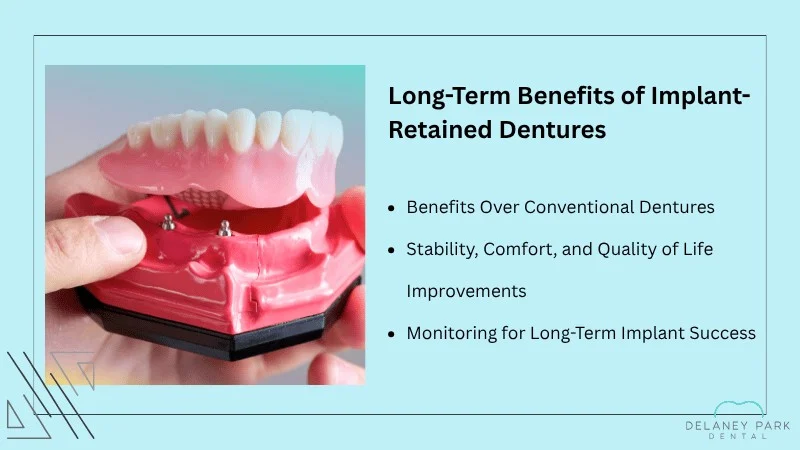
Implant-retained dentures give you more stability than traditional dentures and help protect your jawbone health as you age.
Research shows strong implant success rates in older adults when dentists plan and monitor treatment carefully.
Benefits Over Conventional Dentures
Traditional dentures sit on top of your gums. Over time, they can speed up bone loss because they do not stimulate your jawbone.
Implant-retained dentures attach to dental implants placed in your jaw. These implants act like tooth roots and help maintain jawbone health by providing steady pressure during chewing.
Studies on seniors show strong long-term results. A review on the prognosis of implants with implant-supported fixed dental prostheses in elderly patients reported high survival rates over 5 to 10 years.
You may also need fewer adjustments compared to conventional dentures. Implant-retained dentures often reduce slipping, sore spots, and the need for adhesive.
For many people over 60, this option offers a more secure fit while limiting further bone shrinkage.
Stability, Comfort, and Quality of Life Improvements
When your denture locks onto implants, it moves less during speech and meals. That added stability often makes eating and speaking easier.
Research on older adults found excellent outcomes in patients receiving implants, including strong survival rates and high satisfaction scores in dental implants in older adults.
Many patients report better comfort and confidence compared to traditional dentures.
You may notice:
- Less movement while chewing
- Fewer pressure sores
- Clearer speech
- Improved bite strength
Dentures can also support facial structure by slowing bone loss. This helps reduce the sunken look that can happen with long-term denture wear.
If you live in Anchorage and enjoy tougher foods like meats or fresh vegetables, the added stability can make a clear difference in daily life.
Monitoring for Long-Term Implant Success
Long-term implant success depends on regular care. Even strong implant success rates do not replace routine checkups.
Your dentist will monitor:
| Area Checked | Why It Matters |
| Gum health | Prevents infection around implants |
| Bone levels | Confirms stable jawbone health |
| Denture fit | Prevents uneven pressure |
A long-term review on 10-year dental implant survival supports that implants can perform well for many years when maintained properly.
You should brush daily, clean under the denture, and attend scheduled exams. If you have dry mouth, diabetes, or osteoporosis, your dentist may suggest more frequent visits.
With steady care, implant-retained dentures can remain stable and functional well into your later years.
Frequently Asked Questions
Many adults in their 60s, 70s, and even 80s choose implants. Your bone density, medical history, and healing ability matter more than your age alone.
Are dental implants a safe option for people in their 60s and beyond?
Yes, dental implants are often safe after 60. Research shows strong success rates in healthy older adults, and age by itself does not block treatment.
Many dentists explain that people in their 80s and 90s still receive implants when their health is stable.
Your dentist will review your health history, check your gums, and evaluate your jawbone before moving forward. If you manage chronic conditions well, you can expect results similar to younger patients.
How does lower bone density affect dental implant success?
Lower bone density can slow the bonding process between your jawbone and the implant. This process, called osseointegration, gives the implant its strength.
Bone loss does not mean you cannot get implants. It may mean you need added support or a longer healing period.
Your dentist will look at bone height and thickness in the exact area where the implant will sit. Good planning reduces the risk of failure.
What tests or scans are used to check if I have enough jawbone for implants?
Your dentist will take digital X-rays first. These images show bone levels and nearby tooth roots.
Many offices also use a 3D cone beam CT scan. This scan measures bone width and density with more detail than a standard X-ray.
These images help your dentist decide if you can place the implant right away or if you need extra steps first.
If I’ve lost bone over time, what options can help me still qualify for implants?
Bone grafting is a common solution. A graft adds material to thin or weak areas so your jaw can hold an implant securely.
After the graft heals, your dentist can place the implant in stronger bone. Many senior-focused implant guides explain how grafting restores support for treatment.
In some cases, your dentist may suggest shorter or angled implants. These techniques work around areas with less bone.
How long does healing usually take for older adults getting dental implants?
Most implants need about three to six months to fully bond with your jawbone. Older adults may heal on the longer end of that range.
Healing time depends more on your health than your birth date. Doctors who study implant healing in older adults note that overall health, diabetes control, and bone quality affect recovery more than age alone.
You may need a few extra weeks before placing the crown. Your dentist will confirm healing with exams and imaging before moving ahead.
Are there any health conditions or medications after 60 that could delay or prevent implant treatment?
Yes, certain conditions can slow healing. Uncontrolled diabetes, advanced gum disease, and heavy smoking raise the risk of problems.
Some medications also affect bone healing. Blood thinners, long-term steroids, and certain osteoporosis drugs may require special planning.
You should share a full list of your medications and medical diagnoses. Your dentist and physician can work together to decide if implant treatment is safe and how to lower your risk.