Skip to content




Jaw pain years after getting dentures is frustrating, especially when your dentures used to feel fine.
This pain often happens because your jawbone changes shape over time, causing your dentures to fit less securely and put extra stress on your jaw joint.
If you’re experiencing jaw pain with dentures, you may also notice clicking sounds, morning stiffness, or soreness that gets worse as the day goes on. These signs can point to bigger changes happening under the surface.
Long-time denture wearers are especially likely to run into these issues since bone loss speeds up the longer you go without your natural teeth.
The good news is that you have options. Understanding why your jaw hurts can help you decide if a simple adjustment will fix the problem, or if it’s time to look into dental implants for better stability and comfort.
Key Takeaways
- Your jawbone can shrink over time, changing how your dentures fit and causing pain.
- Jaw clicking, stiffness, or soreness can signal that your denture is affecting your jaw joint.
- Dental implants may offer a more stable, long-term solution if your jaw pain keeps coming back.
How Dentures Can Lead to Jaw Pain Over Time
Your jaw doesn’t stay the same shape year after year, and that’s a big part of why old dentures start to hurt.
As your bone changes, your bite can shift too, and both of these problems put extra strain on your jaw muscles.
Changes in Denture Fit as the Mouth Changes
Your jawbone naturally shrinks once your natural teeth are gone. This is called bone resorption, and it happens slowly but steadily.
As this bone loss continues, your gums and jaw ridge change shape too. Traditional dentures that fit well at first won’t stay that way forever.
Even a denture fit that felt perfect five years ago may now be loose or uneven. This mismatch between your dentures and your changing mouth is one of the most common causes of jaw pain and facial pain for long-term wearers.
Regular checkups help your dentist catch these changes early. Waiting too long often means dealing with ill-fitting dentures that make everyday chewing uncomfortable.
Bite Alignment and Lost Vertical Dimension
Your bite alignment depends on your teeth meeting at the right height, which dentists call vertical dimension. When your jawbone shrinks, your dentures can sit lower than they used to.
This drop changes how your upper and lower jaw come together. Your bite may feel “off,” even if you can’t quite explain why.
Over time, this misalignment forces your jaw muscles to work harder just to chew normally. That extra effort can lead to soreness, headaches, or a tired feeling in your jaw by the end of the day.
New dentures, or an adjustment to your current ones, can help restore proper vertical dimension. This isn’t just about comfort.
Getting your bite alignment corrected helps protect your jaw joint and muscles from unnecessary strain over the long term.
How Unstable Dentures Strain Jaw Muscles
When your dentures shift or slide while you eat or talk, your jaw muscles have to work overtime to keep them in place. This constant compensating can tire out your muscles fast.
Here’s what unstable dentures often lead to:
- Uneven pressure on certain areas of your gums and jawbone
- Overworked muscles trying to stabilize loose dentures
- Soreness or aching that builds up throughout the day
- Clicking or popping near your jaw joint
This kind of strain doesn’t just cause temporary discomfort.
Over months and years, it can contribute to ongoing jaw pain and even affect your jaw joint’s health, since a misaligned bite from poorly fitting dentures can put pressure on nearby nerves and soft tissue.
If your dentures constantly feel like they’re moving around, that’s a sign something needs to change.
When Denture Problems May Be Affecting the TMJ
Old or ill-fitting dentures can put stress on your jaw joint, leading to pain that shows up years later. Here’s how to spot the signs and figure out if your dentures are the real cause.
Common TMJ Symptoms to Watch For
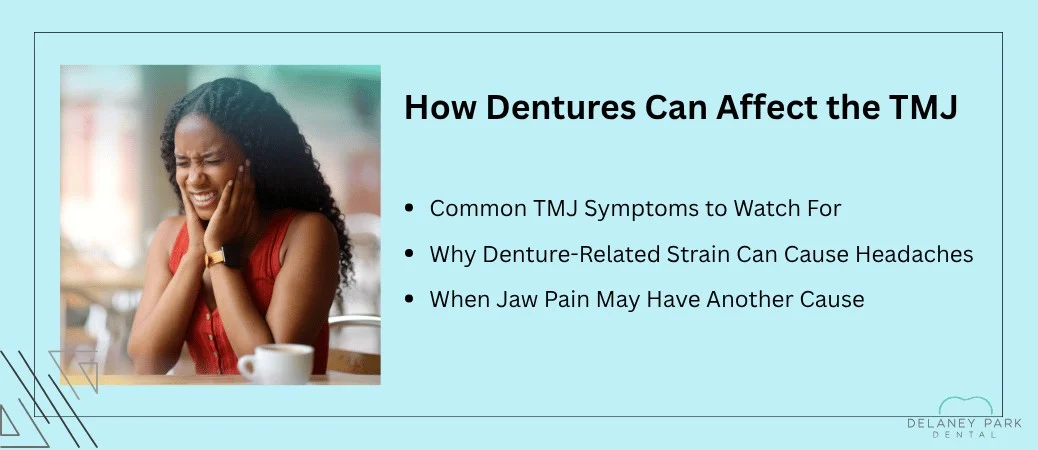
Your temporomandibular joint, or TMJ, connects your jaw to your skull. When this joint gets stressed, you’ll notice it in specific ways.
Watch for these signs of TMJ disorders:
- Clicking or popping when you open your mouth
- Jaw stiffness, especially in the morning
- Pain near your ears or under your cheekbones
- Trouble opening your mouth all the way
- A jaw that feels stuck or locked at times
These symptoms often build up slowly. You might not connect them to your dentures right away because they can feel like other problems, such as a sinus issue or general fatigue.
If you notice several of these signs together, your dentures could be part of the problem.
Why Denture-Related Strain Can Cause Headaches
When your dentures don’t fit right, your jaw muscles have to work harder to keep them in place. This extra effort can lead to headaches linked to jaw pain.
Here’s what typically happens:
- Your bite shifts out of its normal position.
- Jaw muscles clench or tense up to compensate.
- That tension spreads to nearby muscles in your temples and forehead.
You may feel this as a dull ache that gets worse as the day goes on. It often shows up after long periods of talking or chewing.
If your headaches seem to start or worsen when you’re wearing your dentures, that’s a clue worth paying attention to.
When Jaw Pain May Have Another Cause
Not all jaw pain traces back to your dentures. Sometimes the cause is something else entirely.
Other possible sources of facial pain include:
- Sinus infections or congestion
- Teeth grinding at night, even without dentures
- Arthritis in the jaw joint
- Stress-related muscle tension
- Nerve issues unrelated to your bite
Your dentist can help you figure out which factor is at play. They’ll check your bite, look at how your dentures fit, and rule out other causes before recommending a fix.
Getting the right diagnosis matters. It helps you avoid treating the wrong problem and wasting time on fixes that won’t help.
Jawbone Loss and Its Effect on Denture Stability
When you lose teeth, your jawbone starts to change shape underneath your gums. This process explains why dentures that fit well at first can feel loose or uncomfortable years later.
Why Bone Resorption Starts After Tooth Loss
Your natural teeth do more than let you chew. The roots send signals to your jawbone every time you bite down, and this keeps the bone strong and full.
Once you lose teeth, that signal disappears. Without it, your body starts to break down and absorb the bone in that area, a process called bone loss after tooth loss.
Traditional dentures sit on top of your gums instead of inside your jawbone. They can’t send the same signals that tooth roots once did, so bone loss keeps happening even after you start wearing them.
This is true whether you wear a full set or partial dentures to replace missing teeth.
Signs That Bone Height or Volume Has Declined
You may notice changes in your face and mouth before you ever look at an X-ray. Here are some common signs:
- Your dentures feel loose, even right after an adjustment
- Your cheeks look sunken or your lips seem thinner
- Your chin appears to jut out more than before
- You feel more folds or wrinkles around your mouth
- Chewing feels harder or less stable than it used to
These changes often mean your jaw has lost bone height and bone volume. A dentist can confirm this with an X-ray, which shows lower bone density in the areas where teeth used to be.
How Loose Dentures Can Create a Cycle of Discomfort
Once your jawbone shrinks, your denture fit changes too. A denture that used to feel snug can start slipping, rubbing, or rocking when you talk or eat.
This looseness often makes you bite down harder to keep your denture in place. That extra pressure can speed up further bone loss, which then makes the denture even less stable.
Over time, this cycle can lead to sore spots, jaw pain, and frustration with a tooth replacement that once worked well. Breaking this cycle usually means addressing the bone loss itself, not just adjusting the denture again.
Signs It May Be Time to Consider Dental Implants
Your jaw pain and denture problems might be telling you something important. Here are the signs to watch for and what they mean for your smile.
Persistent Slipping, Soreness, or Trouble Chewing
If your dentures move around when you talk or eat, that’s a big red flag. Loose dentures rub against your gums and cause sore spots.
Over time, your jawbone shrinks after you lose teeth. This bone loss makes your dentures fit worse and worse, even if they fit fine at first.
You might also notice you’re avoiding certain foods. Apples, steak, or even bread can feel impossible to chew with ill-fitting dentures.
This happens because your dentures sit on top of your gums instead of being anchored like real teeth. Dental implants use an artificial tooth root that’s placed directly in your jawbone.
This gives you a stable base that won’t slip or shift when you eat or speak.
Frequent Relines and Replacements
Do you find yourself back at the dentist every year or two for a reline? This is common with regular dentures, but it can get old fast.
Relines happen because your jawbone keeps changing shape. As bone loss continues, your dentures no longer match the shape of your gums. Your dentist adjusts them to fit better, but this is only a short-term fix.
Some people also need full denture replacements every five to seven years. This adds up in time and money.
Dental implants work differently. Since they connect to your jawbone, they help stop the bone loss that causes this cycle. Many people find they don’t need constant adjustments once they switch from dentures to implants.
Implant-Supported Dentures Versus Conventional Dentures
Conventional dentures rest on your gums. Implant-supported dentures snap onto small posts that are placed in your jawbone.
Here’s how they compare:
| Feature | Conventional Dentures | Implant-Supported Dentures |
| Stability | Can slip or move | Stays firmly in place |
| Bone health | Bone loss continues | Helps preserve jawbone |
| Chewing power | Limited, softer foods only | Closer to natural biting force |
| Maintenance | Regular relines needed | Fewer adjustments over time |
| Comfort | Sore spots common | Less rubbing and irritation |
An implant-supported denture gives you the confidence to eat and speak without worrying about your teeth moving. This is one of the biggest advances in implant dentistry over the last few decades.
If your current prosthetic teeth aren’t working well anymore, this option might be worth exploring with your dentist.
What an Implant Evaluation Involves
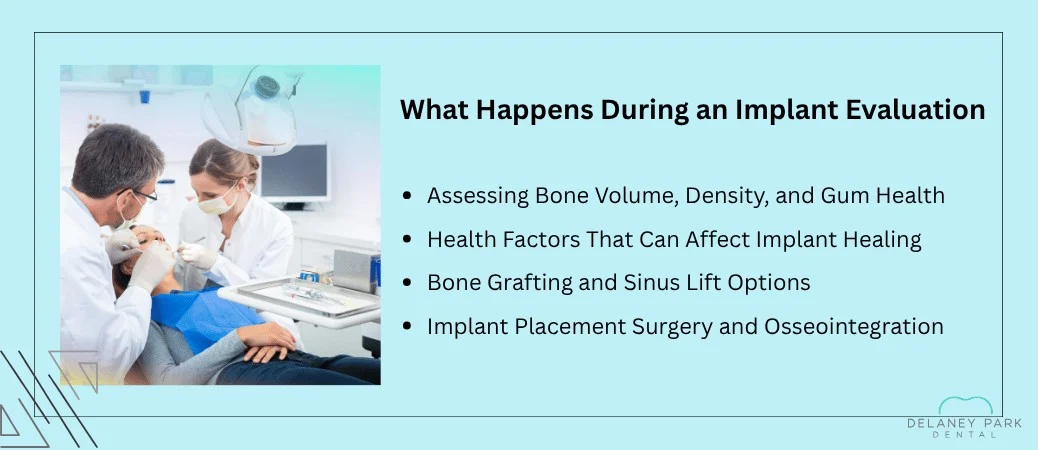
Getting implants after years of denture use starts with a full checkup that looks at your jawbone, gums, and overall health.
Your implant dentist will use this information to figure out if you’re a good candidate and what steps you might need before surgery.
Assessing Bone Volume, Density, and Gum Health
Your dentist will start by checking how much bone you have left in your jaw. Years of wearing dentures can cause bone to shrink, since there’s no tooth root to keep stimulating it.
A 3D scan or X-ray shows both bone volume and bone density. This tells your dentist if your jaw is strong enough to hold an implant.
Gum health matters too. Signs of gum disease, like swelling, redness, or bleeding, need to be treated first. Healthy gums help implants heal properly and stay in place long-term.
Health Factors That Can Affect Implant Healing
Your overall health plays a big role in how well implants heal. Some conditions can slow down healing or raise the risk of problems.
Here are a few factors your dentist will ask about:
- Smoking: This can reduce blood flow to your gums and slow healing after surgery.
- Diabetes: Well-managed diabetes usually isn’t a problem, but uncontrolled diabetes can make it harder for your body to fight infection and heal.
- Autoimmune conditions: These can sometimes affect how your body responds to the implant.
- Certain medications: Some drugs, like those for osteoporosis, may affect bone healing.
Your dentist will talk with you about any of these factors and how they might affect your treatment plan.
At Delaney Park Dental, Dr. Todd C. Miles can evaluate your jawbone, denture fit, and oral health to determine whether an adjustment, replacement denture, or dental implant treatment may better fit your needs.
Bone Grafting and Sinus Lift Options
If your jawbone is too thin or short for an implant, don’t worry. Your dentist has ways to build it back up.
Bone grafting adds material to your jaw to create a stronger base for the implant. This material can come from your own body, a donor, or a synthetic source.
If you need implants in your upper back jaw, you might need a sinus lift. This procedure raises the sinus floor and adds bone underneath it, since the sinuses often expand into this space over time.
Both procedures need healing time before implant placement, usually a few months.
Implant Placement Surgery and Osseointegration
Once your bone is ready, your dentist will move forward with implant placement surgery. This involves inserting a small titanium post into your jawbone, where it will act like a tooth root.
After placement, your body needs time to heal through a process called osseointegration.
This is when the bone grows around the implant and locks it firmly in place, which is an important part of the dental implant recovery timeline.
Once healing is complete, your dentist attaches abutments to the implants. These small connector pieces hold your new replacement teeth securely on top of the implant posts.
Next Steps for Lasting Jaw Comfort
Jaw pain from dentures doesn’t have to be something you just live with. A few clear steps can help you figure out what’s causing your discomfort and find a fix that actually works.
Schedule a Denture and Bite Assessment

Your first move should be booking a checkup with your dentist. They can check your denture fit and see if your bite alignment has shifted over time.
Your jawbone and gums change shape as you age, even years after you first got dentures. This means a denture that fits fine at first can slowly become loose or uneven, putting extra strain on your jaw joint.
During this visit, your dentist will likely check for signs of TMJ disorders, like clicking, stiffness, or pain when you open your mouth. They may also take x-rays to see how your jawbone has changed.
This gives you a clear picture of what’s really going on before you decide on next steps.
Avoid Adjusting Dentures at Home
It might be tempting to file down a rough spot or bend a clasp yourself, but don’t. Home adjustments can throw off your bite even more and make jaw pain worse.
Dentures need precise shaping to work with your mouth and jaw muscles correctly. Even a small change in one spot can shift pressure to another area, leading to new pain or sores.
If your dentures feel off, call your dentist instead of grabbing tools at home. A professional adjustment is quick, usually painless, and protects your oral health in the long run.
Trying to fix things yourself can end up costing more time and money if it leads to bigger problems later.
Choose a Treatment Plan That Fits Your Needs
Once you know what’s causing your jaw pain, you and your dentist can talk about the best path forward. For some people, a simple denture adjustment is enough to ease the pain.
For others, especially those with ongoing bone loss or a poor denture fit, dental implants might be a better long-term option.
Implants anchor into your jawbone, which can help stop the bone loss that often happens with traditional dentures.
You might also consider implant-supported dentures, which combine the stability of implants with the comfort of a removable denture.
This option can reduce pressure on your jaw joint while still giving you a natural bite feel. Your dentist can walk you through the costs, timeline, and expected results for each choice so you can pick what fits your life best.
Frequently Asked Questions
Jaw pain after wearing dentures for years can come from several different causes, and knowing the signs can help you figure out what is really going on.
Here are some common questions people ask about jaw pain, denture fit, and when implants might be a better choice.
Can dentures cause jaw and ear pain years after getting them?
Yes, this can happen even if your dentures fit well when you first got them. Over time, your jawbone changes shape, which can make your dentures shift and put pressure on your jaw joint.
This pressure can lead to jaw pain that spreads toward your ears. You might also notice headaches or a clicking sound when you open your mouth.
How can I tell if my jaw pain is caused by my dentures?
Pay attention to when the pain shows up. If it gets worse while you eat or after wearing your dentures all day, they are likely part of the problem.
You might also feel soreness right after you take your dentures out. If pressing on certain spots inside your mouth causes pain, your dentures may not be sitting right.
Can poorly fitting dentures lead to TMJ or jawbone problems?
Yes, a bad fit can force your jaw into an unnatural position. Your jaw joint, called the TMJ, has to work harder to make up for the gap or shift caused by loose dentures.
Over time, this extra strain can lead to joint pain, popping sounds, or trouble opening your mouth all the way. Even dentures that fit perfectly at first can cause TMJ problems once they wear down or your jawbone shrinks.
What are the signs that dentures no longer fit properly?
Loose or slipping dentures are one of the clearest signs. You might also notice sore spots, redness, or small sores on your gums.
Trouble chewing certain foods or a change in how your bite feels can point to a fit problem too. Your dentures play a role in your jaw health, and a poor fit can affect more than just comfort, it can also impact your jawbone over time.
When should I consider dental implants instead of dentures?
If your jaw pain keeps coming back even after adjustments or relines, implants might be worth discussing with your dentist. Implants attach directly to your jawbone, so they do not rely on gum pressure the way dentures do.
This can help stop ongoing bone loss and give you a more stable bite. In fact, dentures alone do not stop bone loss, while implants help keep your jawbone active and strong.
Why does an implant hurt when I chew years after placement?
Pain around an implant years later can mean something has changed near the implant site. This could include bone loss, a loose implant, or even an infection in the gum tissue around it.
It could also point to a bite problem, where your teeth are not meeting evenly. If you notice new pain while chewing, it is smart to get it checked, since jaw pain after dental work can have several causes that are easier to treat early.