Skip to content


Getting your wisdom teeth out in your 30s or 40s can feel like a whole different experience compared to what your teenage friends went through.
You might wonder if you missed your window or if the procedure is now more complicated.
The truth is that wisdom teeth removal for adults is generally safe, but it does come with more surgical planning because roots are fully grown and jawbone is denser.
This doesn’t mean you should worry, but it does mean you should know what to expect.
Your third molars don’t stop growing just because you’re an adult. They keep developing roots and settling into your jaw, which can make wisdom teeth removal after 30 more complex than it would have been at 18.
This guide walks you through why age matters, when you should consider removal, and how to prepare for a smoother recovery.
Whether you’re dealing with pain, crowding, or your dentist just flagged it during a checkup, understanding your options can help you feel more confident.
Good oral health doesn’t have an age limit, and knowing what changes as you get older can help you make the right call for your mouth.
Key Takeaways
- Adult teeth removal often involves denser bone and fully formed roots, which can affect healing time.
- Choosing the right time and provider can make your procedure and recovery go more smoothly.
- Knowing what to expect before, during, and after surgery helps you spot warning signs early.
How Age Changes Extraction Complexity
Your age plays a big role in how simple or complex your wisdom teeth removal will be. As you get older, your bones and roots change in ways that make surgery a bit more involved.
Denser Bone and Fully Formed Roots
Your jawbone gets denser as you age. In your teens, bone is softer and easier to work with. By your 30s or 40s, bone density increases, making it harder for your surgeon to remove a tooth.
Your tooth roots also change over time. In younger patients, roots are still growing and haven’t taken their final shape. By adulthood, your roots become fully formed, often longer and curved.
These fully formed roots can sit close to nerves in your jaw. This means your surgeon needs to be extra careful during the procedure.
The combination of denser bone and mature roots is the main reason adult extractions take more time and skill than teen extractions.
Why Impacted Teeth Can Be More Difficult
An impacted wisdom tooth is one that hasn’t fully broken through your gum. This happens because there isn’t enough room in your jaw for it to grow normally.
If you still have an impacted wisdom tooth in your 30s or 40s, it has had years to settle deeper into your jawbone.
Your surgeon may need to remove more bone to access it, which turns what could have been a simple extraction into a surgical extraction.
Impacted wisdom teeth extraction also gets trickier because your body has had more time to build stronger connections between the tooth and surrounding tissue.
In some cases, the periodontal ligament creates a tighter interface between your tooth and jawbone, making the tooth harder to loosen and remove.
Comparing Adult and Teen Recovery
Your recovery time after wisdom tooth extraction tends to be different depending on your age. Teens usually bounce back within a few days because their bodies heal faster and their bones are less dense.
As an adult, you may notice your recovery takes a little longer. Your body’s inflammatory response is often stronger, which can lead to more swelling or discomfort after surgery.
You’re also more likely to develop dry socket if you’re over 25, so following your aftercare instructions closely really matters.
The good news is that with proper care, your healing process can still go smoothly. Many adults in their 30s or 40s recover well from wisdom teeth extraction, even if it takes a few extra days compared to a teenager.
When Removal May Be the Right Choice
Some wisdom teeth need to come out, no matter your age. Here’s how to know if removal makes sense for you.

Pain, Recurrent Swelling, and Gum Infection
If your wisdom tooth hurts over and over, that’s a sign something is wrong. Swelling that keeps coming back is also a red flag.
These symptoms often point to gum infection around the tooth. This happens when food and bacteria get trapped under the gum. Adults tend to have more swelling and infection risk than teens.
Left untreated, wisdom tooth infections can spread to nearby teeth and tissue. This can hurt your long-term oral health. If you keep getting infections, your dentist will likely recommend removal instead of ongoing treatment.
Hidden Damage Found During Dental Exams
Sometimes you don’t feel any pain, but your dentist finds a problem on an X-ray. This is common with impacted wisdom teeth that haven’t fully broken through the gum.
Your dentist might spot:
- Cysts forming around the tooth
- Bone loss near the roots
- Periodontal pockets where bacteria collect
- Damage to the roots of nearby teeth
Cysts can grow slowly without any signs. If left alone, they can damage the jawbone or nearby teeth.
Catching these issues early through regular checkups is one of the best reasons to keep up with dental visits, even if your wisdom teeth don’t hurt.
When Monitoring a Healthy Tooth Is Reasonable
Not every wisdom tooth needs to come out right away. If yours is fully erupted, easy to clean, and not causing crowding, your dentist may suggest watching it instead.
This works best when you can keep up good oral hygiene around the tooth. Regular cleanings and X-rays help track any changes over time.
Many adults in their 30s and 40s choose to monitor healthy wisdom teeth rather than remove them right away.
Your dentist will check for early signs of trouble at each visit. If nothing changes, you may never need removal at all.
Planning a Safer Adult Procedure
Good planning makes a real difference when you have wisdom teeth removed as an adult. Your imaging, your choice of provider, and your anesthesia plan all work together to lower your risk and make recovery smoother.
At Delaney Park Dental, your treatment starts with a careful evaluation of your wisdom teeth, root position, and surrounding structures so your dental team can determine the right approach for your needs.
X-Rays, CBCT Imaging, and Nerve Assessment
Your dentist will likely start with a panoramic x-ray to get a basic view of your wisdom teeth and jaw. This flat image shows tooth position and root shape, but it does not show depth.
That’s where CBCT imaging comes in. This type of scan creates a detailed 3D picture of your jaw, teeth, and nerves.
CBCT scans are especially useful for checking nerve proximity near your lower wisdom teeth. Your inferior alveolar nerve runs through your jawbone close to these teeth.
If your roots sit too close to this nerve, your surgeon needs to know before surgery starts.
This step matters because nerve damage is one of the risks that becomes more likely with age, since adult roots often sit deeper in denser bone. Advanced imaging lets your provider plan around your nerve rather than risk it.
Choosing Between a Dentist and Oral Surgeon
Not every wisdom tooth extraction needs a specialist. If your tooth has fully come through your gum and sits in a simple position, your regular dentist may be able to handle it.
But adult cases often involve impacted teeth, curved roots, or teeth close to your nerve. In these situations, an oral surgeon is usually the better choice.
Board-certified oral surgeons complete extra years of surgical training after dental school. This training focuses on procedures like complex extractions, sedation, and managing surgical risks.
You should ask for a referral to an oral surgeon if:
- Your tooth is impacted or partly covered by bone
- Imaging shows your roots are close to a nerve
- You have a health condition that raises your surgical risk
- You need sedation beyond local numbing
Oral surgeons also have the equipment and staff needed to monitor you safely during sedation.
Anesthesia and Sedation Options
Your comfort during surgery depends on the type of anesthesia you choose. Local anesthesia numbs only the area around your tooth, and you stay fully awake.
IV sedation puts you in a relaxed, sleepy state while still letting you breathe on your own. Many adults choose this option for impacted or multiple-tooth extractions.
General anesthesia puts you fully to sleep. This option is usually reserved for complex cases or for patients who feel very anxious about surgery.
Your provider will help you pick from these sedation dentistry options based on how complex your extraction is, your medical history, and your comfort level.
Talk with your surgeon ahead of time about which choice fits your specific situation best.
What Happens During the Extraction
Your dentist or oral surgeon will choose a removal method based on how your wisdom teeth are positioned and how fully they’ve grown in.
The steps can range from a quick, simple pull to a more involved surgical process, depending on your specific case.
Simple Versus Surgical Removal
A simple extraction works well when your wisdom tooth has fully broken through your gums and has a single, straight root.
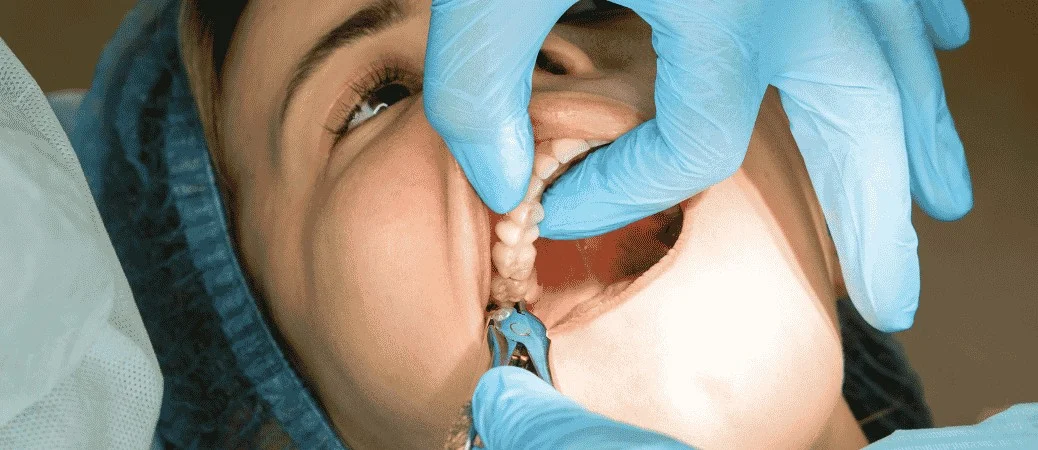
Your dentist loosens the tooth with a tool called an elevator, then removes it with forceps. This is usually quick and doesn’t require cutting into your gum tissue.
A surgical extraction is needed when the tooth is impacted, meaning it’s stuck below the gum line or growing at an angle.
Your surgeon will make a small cut in your gum to reach the tooth. Adults over 30 are more likely to need this surgical approach since their roots have fully formed and their teeth may not have erupted properly.
Tooth Sectioning and Bone Access
If your wisdom tooth is impacted or has curved roots, your surgeon may need to cut it into smaller pieces. This is called tooth sectioning, and it makes removal easier and safer by reducing the amount of force needed to pull out the tooth.
Sometimes your surgeon also needs to remove a small amount of jawbone to access the tooth fully. This step is more common in adults because bone tends to get denser with age.
As your surgeon explained during your consultation, denser bone and longer roots can make this part of the process take a bit longer than it would for a teenager.
What to Expect on Surgery Day
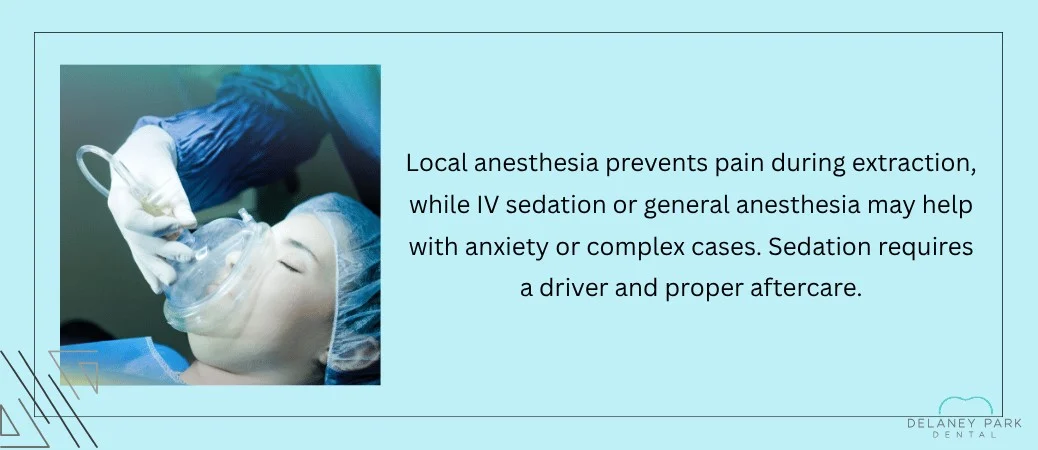
On the day of your procedure, your surgeon will numb the area with local anesthesia so you won’t feel pain during the extraction.
Many adults also choose IV sedation to feel relaxed and calm, or in some cases, general anesthesia if multiple teeth need removal or the case is more complex.
The extraction itself often takes less than an hour, though this varies based on how many teeth you’re having removed. You’ll need someone to drive you home afterward if you choose sedation or general anesthesia.
Your surgeon will also give you clear aftercare instructions to help you heal smoothly once you’re back home.
Recovery, Aftercare, and Warning Signs
Healing after wisdom teeth removal follows a pretty predictable path, and knowing what to expect can help you feel calmer during the process.
This holds true whether you’re in your teens or dealing with an adult wisdom tooth extraction in your 30s or 40s.
Managing Swelling, Soreness, and Jaw Stiffness
Swelling and soreness are normal after surgery. They usually peak around day two or three, then start to improve.
Ice packs are your best friend during the first 24 to 48 hours. Hold one against your cheek for 15 to 20 minutes at a time, with breaks in between, to keep swelling down.
Jaw stiffness is also common, especially for adults. Your jaw muscles were stretched during surgery, so opening wide may feel tight for a few days.
Gentle stretches can help once the initial soreness fades. Your surgeon will tell you when it’s safe to start. Over-the-counter or prescribed pain medication can also make this stretch of healing more comfortable.
Food, Hygiene, and Activity During Healing

Soft foods are the way to go for the first few days. Think mashed potatoes, yogurt, scrambled eggs, and smoothies without a straw, since sucking motions can disturb healing sockets.
Slowly add back solid foods as chewing gets easier and less painful.
Good oral hygiene matters just as much now as before your surgery. Skip vigorous rinsing or brushing near the extraction sites for the first day, then gently rinse with warm salt water starting the next day.
This helps prevent a gum infection while your gums close up.
Keep physical activity light for the first few days. Skip the gym, heavy lifting, or anything that raises your blood pressure, since this can lead to more bleeding or swelling.
Dry Socket and Symptoms That Need Prompt Care
Dry socket happens when the blood clot protecting your extraction site comes loose too early. It’s more common in adults than teens, and it causes a sharp, throbbing pain that often starts two to four days after surgery.
You might also notice a bad taste or smell coming from the socket.
Call your dentist or oral surgeon right away if you notice any of these signs:
- Pain that gets worse instead of better after day three
- Fever, chills, or swelling that spreads
- Pus or a foul odor from the extraction site
- Numbness that doesn’t fade
- Bleeding that won’t stop after 24 hours
Catching these symptoms early makes treatment easier and faster, so don’t wait if something feels off.
Frequently Asked Questions
Extraction after 30 or 40 comes with its own set of questions about safety, healing time, and how your age changes the procedure.
Here are straight answers to the questions people ask most often about having wisdom teeth removed as an adult.
Is wisdom teeth removal more difficult in your 30s or 40s than during your teens?
Yes, it usually is a bit harder. By your 30s or 40s, your jawbone is denser and your tooth roots are fully formed, which means your dentist or oral surgeon has to plan more carefully using 3D imaging.
In your teens, the roots haven’t fully developed yet and the bone is softer, so the teeth come out more easily. That doesn’t mean adult extractions are unsafe.
It just means your surgeon needs more precise tools and techniques to get the job done smoothly.
What risks are more common when having wisdom teeth removed as an adult?
As an adult, you face a slightly higher chance of complications like nerve issues, infection, or a longer bleeding time.
Your roots are longer and more curved by this point, and they sit deeper in bone that has fully hardened around the tooth.
You’re also more likely to have some inflammation or infection already brewing around the tooth before surgery even starts. This is one reason why adults often see slightly higher complication rates than teens, even though most procedures still go smoothly.
Does recovery from wisdom tooth extraction take longer after age 30?
Generally, yes. Your body doesn’t heal quite as fast at 30 or 40 as it did at 18, so swelling and soreness can stick around a little longer.
Denser bone also means your surgical site needs more time to close up and settle. Most adults still return to normal activities within a week or two, but full healing underneath the gums can take longer than it would for a teenager.
Can older adults still have wisdom teeth removed safely?
Absolutely. People in their 30s, 40s, and even 50s get their wisdom teeth removed safely every day.
Your surgeon will simply take extra steps to plan around your bone density and root position. If you have any health conditions like diabetes or take blood thinners, your surgeon will factor those in too, but age by itself isn’t a reason to avoid the procedure.
What should I expect during recovery after wisdom teeth removal in my 40s?
Expect some swelling, mild pain, and tiredness for the first few days after surgery. You’ll likely need to stick to soft foods and avoid strenuous activity while the extraction site starts to heal.
Because your bone and gum tissue take longer to bounce back at this age, don’t be surprised if full comfort takes a bit longer than you’d expect.
Your surgeon will give you specific instructions on rinsing, medication, and follow-up care based on how your extraction went.
When is it better to keep wisdom teeth instead of having them removed?
If your wisdom teeth are fully erupted, positioned correctly, and not causing pain, crowding, or decay, your dentist may recommend leaving them alone. Many adults keep healthy wisdom teeth their whole lives without any problems.
However, if your teeth are impacted, infected, or pushing against other teeth, waiting usually makes things worse rather than better.
Your dentist can check your specific situation with x-rays and let you know whether monitoring or removal makes more sense for you.