Skip to content




Full-arch dental implant surgery gives you a full set of secure teeth in one treatment, but healing takes time. You may feel excited about your new smile and unsure about what happens next.
Most people need about 3 to 6 months for full healing, with the first two weeks focused on managing swelling and the next few months allowing the implants to bond with the jawbone.
During the first 48 hours, you can expect soreness, swelling, and a soft food diet. Over the next several weeks, your gums settle while the implant posts slowly fuse with your bone.
As healing moves forward, your dentist checks your progress and plans your final teeth. When the bone fully supports the implants, you switch from temporary teeth to your permanent set.
Knowing this timeline helps you feel prepared and stay on track.
Key Takeaways
- Full healing usually takes several months, with early soreness in the first two weeks.
- Your implants need time to fuse with your jawbone before final teeth placement.
- Careful follow-up visits and good home care and maintenance support long-term success.
Speak with an implant specialist to plan a smooth and successful recovery after surgery.
What Is Full-Arch Dental Implant Surgery?
Full-arch dental implants replace all teeth in your upper jaw, lower jaw, or both using a small number of strong implant posts. This treatment gives you fixed teeth that stay in place and let you eat, speak, and smile with more stability.
Full-Arch Dental Implants vs Traditional Dentures
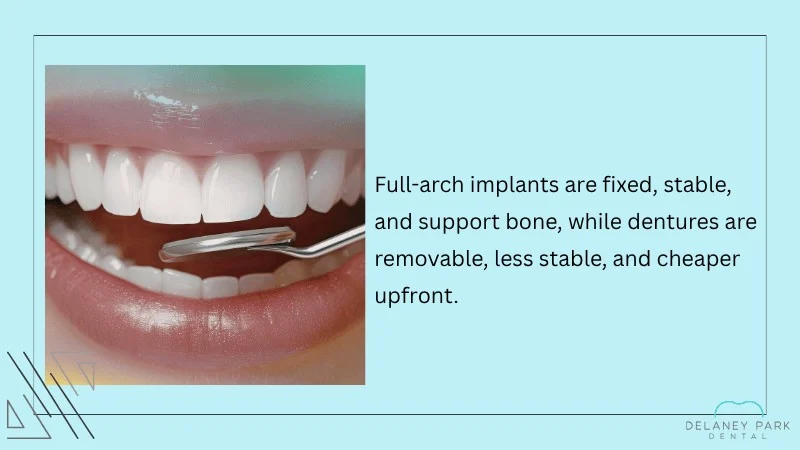
Full-arch dental implants attach to titanium posts that a surgeon places into your jawbone. These posts act like artificial tooth roots. Your new teeth connect to them, so they do not slip or move.
Traditional dentures rest on top of your gums. They rely on suction or adhesive to stay in place. Over time, your jawbone can shrink, which may cause loose fit and sore spots.
With implants, the titanium posts help support the bone because they fuse with it. This process helps keep your jaw more stable. You also get stronger bite force compared to removable dentures.
Dentures cost less at first. However, full arch dental implants offer a fixed solution that does not need to come out at night.
Overview of the Surgical Process
Dental implant surgery for a full arch usually takes place in stages. Your dentist starts with exams, X-rays, and 3D scans to check your bone level and plan exact implant placement.
During surgery, the provider places several titanium posts into your jawbone. These posts sit under the gums and serve as anchors for your new teeth. You may receive temporary teeth the same day in some cases.
Scientists are also moving closer to regrowing lost teeth. Researchers have triggered early tooth formation in the lab, and a drug in Japan has passed its first human safety trial. These treatments are still years away from patient use, so implants remain the proven option today, and knowing what to expect during recovery helps you prepare.
The first week often brings swelling and mild discomfort. Many patients follow a soft food diet during early healing, as described in this week-by-week recovery guide for full-mouth.
All-on-4 and Other Techniques
All-on-4 is one of the most common full-arch dental implant methods. It uses four implants placed at specific angles to support a full set of teeth. The angled placement helps use available bone and may reduce the need for bone grafting.
Some cases use four to six implants, depending on your bone strength and arch size. This approach spreads out pressure and improves long-term stability.
Your dentist chooses the technique based on your bone health, bite, and goals. Each plan aims to give you secure, fixed teeth that function like natural ones.
Immediate Post-Surgical Recovery (First 48 Hours)
The first two days after full arch implants focus on controlling swelling, limiting bleeding, and protecting the surgical sites. What you do during this short window has a direct effect on your dental implant recovery.

Managing Swelling, Bleeding, and Discomfort
You will likely notice swelling in your cheeks and jaw within a few hours. Swelling often peaks around 48 hours after surgery, which is normal during dental implant recovery time.
Use a cold pack on the outside of your face for 15 to 20 minutes at a time. Keep a thin cloth between the ice and your skin. Do this on and off during the first day.
Mild bleeding or oozing is common after full arch implants. Bite gently on gauze pads and change them as directed. If you see steady bleeding that does not slow after firm pressure, call your surgeon.
Take prescribed pain medicine exactly as directed. Do not wait until pain becomes strong. Staying ahead of discomfort helps you rest and heal.
Avoid spitting, using straws, or rinsing hard during the first 24 hours. These actions can disturb the blood clot around your dental implants.
First-Day Diet and Activity Restrictions
Stick to a cool, soft diet on the first day. Good options include:
- Smooth yogurt
- Applesauce
- Lukewarm soup (not hot)
- Mashed potatoes
- Protein shakes eaten with a spoon
Avoid hot foods and drinks for at least 24 hours. Heat can increase bleeding and swelling.
Do not chew near the surgical area. If you received temporary teeth with your full arch implants, follow your dentist’s exact instructions on chewing limits.
Limit physical activity. Do not lift heavy objects, bend over, or exercise. Increased heart rate and blood pressure can restart bleeding.
Drink plenty of water, but do not use a straw. Gentle hydration supports healing.
Importance of Rest and Aftercare
Plan to rest with your head elevated on two pillows. Keeping your head slightly raised can reduce swelling.
After the first 24 hours, you may begin a gentle saltwater rinse if your surgeon approves. Mix about half a teaspoon of salt in a cup of warm water. Let it roll around your mouth without force, then let it fall out.
Do not brush directly over the surgical sites at first. You can brush other teeth carefully, using a soft toothbrush.
Full arch dental implants depend on early stability. Avoid touching the area with your tongue or fingers.
Pay attention to warning signs. Increasing pain after day two, heavy bleeding, or fever may need a call to your dental office. Early action protects your dental implants and keeps your recovery on track.
Early Healing Phase (Week 1 to Week 4)
During the first month after dental implant surgery, your body works to reduce swelling, close the gum tissue, and begin bonding the dental implants to your jawbone. You will manage discomfort, protect the surgical sites, and adjust to temporary teeth.
Transition From Swelling to Stability
In the first 48 to 72 hours, you will likely notice swelling, mild bleeding, and soreness. This is normal after full-arch dental implant surgery. Use cold compresses on your face in short intervals during the first two days to limit swelling.
Your dentist may prescribe pain medication or suggest over-the-counter options. Take them as directed. Avoid heavy lifting, bending, smoking, and alcohol during this time.
By the end of Week 1, swelling should decrease. Bruising may fade, and tenderness should improve.
According to this dental implant recovery timeline, most early symptoms improve within the first one to two weeks.
In Weeks 2 to 4, you should feel more stable. The implants remain under the gums, but your bone has already started the bonding process. Stick to soft foods and avoid chewing directly on surgical areas.
Gum Tissue Healing and Suture Care
Your gum tissue begins closing around the implant posts right away. You may have dissolvable sutures, or your dentist may remove them about 7 to 14 days after surgery.
Keep the area clean, but be gentle. Do not brush directly over the surgical sites for the first few days unless your dentist tells you to do so.
Rinse with warm saltwater rinses starting 24 hours after surgery. Use about one teaspoon of salt in a cup of warm water. Rinse lightly after meals to reduce bacteria and food debris.
Healing signs you want to see include:
- Reduced redness
- Less swelling
- No pus or unusual discharge
- Mild discomfort that improves each day
Call your dentist if pain worsens or swelling increases after the first week.
Temporary Prosthetics and Daily Life
Many patients leave surgery with temporary prosthetics or temporary teeth attached to the implants or placed over them. These teeth protect the implants and let you smile and speak during healing.
Your temporary prosthetics are not as strong as your final teeth. Eat foods like:
- Scrambled eggs
- Yogurt
- Pasta
- Mashed vegetables
- Smoothies
Avoid hard, crunchy, or sticky foods. Do not bite into apples, crusty bread, or tough meats.
You may speak with a slight lisp at first. This usually improves within a few days as your tongue adjusts.
The bone will continue to fuse with the dental implants over the next few months. For now, focus on protecting your temporary teeth and following your dentist’s instructions closely.
Osseointegration and Bone Healing (Month 1 to Month 3)
During months one through three, your jawbone bonds with the titanium posts that support your new teeth. This stage decides how stable and strong your full-arch restoration will be.
Understanding Osseointegration
Osseointegration means your jawbone grows and attaches directly to the surface of the titanium posts. This bond turns the dental implants into stable anchors for your full arch dental implants.
The process usually begins within the first few weeks after surgery. Over the next two to three months, bone cells attach to the implant surface and slowly build strength.
Most patients need about 3 to 6 months for full bonding. Your timeline may vary based on bone density, overall health, and whether you needed bone grafting.
During this time, avoid chewing hard foods. Too much pressure can disturb the healing bone and delay integration.
Monitoring Jawbone Integration
Your dentist will schedule follow-up visits during this stage. These visits help confirm that your dental implants stay stable and free from infection.
At each appointment, your provider may:
- Check implant stability
- Examine gum healing
- Take X-rays to review bone levels
- Adjust your temporary full-arch restoration if needed
You may not feel the bone bonding, but your dentist can track changes through imaging and clinical exams. Regular monitoring allows early action if healing slows.
Good daily care supports strong bone healing. Brush gently around the gumline, use any prescribed rinses, and avoid smoking. Smoking reduces blood flow and can interfere with osseointegration.
Signs of Progression and Potential Issues
Healthy healing often includes mild gum firmness around the implant sites. Swelling and tenderness should continue to decrease during this period.
Signs of normal progression include:
- Stable bite with your temporary teeth
- No increasing pain
- Gums that look pink, not bright red
- No drainage or bad taste
Call your dentist if you notice warning signs such as:
- Persistent or worsening pain
- Implant movement
- Swelling that does not improve
- Pus or ongoing bleeding
Early treatment can protect your full-arch dental implants and keep your full-arch restoration on track.
Transition to Permanent Restoration
At this stage, your implants have fused with the jawbone, and your dentist prepares to place your permanent restoration. You move from temporary teeth to a fixed solution designed for long-term use, comfort, and function.

Crown Placement and Abutment Attachment
Your dentist starts by checking that each implant has fully integrated with the bone. This part of dental implant recovery often takes several months, depending on your healing and health history.
Next comes abutment attachment. The abutment is a small connector that links the implant post to your final teeth. In some full-arch cases, the abutments were placed earlier. In others, your dentist places them during this visit after confirming healing.
After the gums shape around the abutments, your provider secures the permanent restoration. This may be a full-arch bridge that anchors to four or more implants.
Your dentist checks:
- Fit along the gumline
- Bite alignment
- Stability when you chew
- Speech clarity
Small adjustments help prevent uneven pressure on the implants.
Adjusting to Your New Smile
You may notice that your bite feels different at first. This is normal.
Your jaw muscles and tongue need time to adjust to the shape and position of your permanent restoration. Speaking certain words may feel slightly awkward for a few days. Practice reading out loud to help your tongue adapt.
Expect mild gum tenderness around the abutments for a short time. This should improve as the tissue settles. If discomfort increases instead of improves, call your dentist.
Focus on daily care right away:
- Brush twice a day with a soft toothbrush
- Clean under the bridge with floss threaders or a water flosser
- Attend follow-up visits for bite checks
Good habits protect your implants and support long-term dental implant recovery.
Expectations for Full Functionality
You can return to a wider range of foods once your dentist confirms stability. Start with softer items and slowly add firmer textures.
Most patients regain strong chewing ability with a fixed full-arch restoration. Implant-supported teeth do not shift like removable dentures. This stability lets you bite into foods like apples or sandwiches with more control.
Still, avoid using your teeth to open packages or chew ice. Excess force can damage the prosthetic teeth even if the implants remain secure.
Healing does not stop the day of crown placement. Bone and gum tissue continue to adapt under normal chewing pressure.
With steady care and routine exams, your permanent restoration should feel natural, stable, and easy to use in daily life.
Long-Term Implant Care and Maintenance
Full arch implants can last many years when you clean them well and see your dentist on schedule. Daily hygiene, early problem detection, and regular checkups protect your dental implants from infection and damage.
Daily Hygiene for Full-Arch Implants
You must clean your full arch implants every day to prevent plaque buildup. Even though dental implants cannot get cavities, the gums around them can still get infected.
Brush at least twice a day with a soft toothbrush. Angle the bristles toward the gumline and clean where the implant meets the gums. Electric brushes often help you remove more plaque with less effort.
Use implant-specific floss, floss threaders, or a water flosser to clean under the bridge. Food and bacteria collect under full arch implants, and skipping this step raises your risk for peri-implantitis.
An antimicrobial rinse may help during high-risk periods, but brushing and flossing matter most. Good implant maintenance keeps the tissue around your implants firm and healthy.
Recognizing and Preventing Complications
Peri-implantitis is one of the most serious long-term risks. It is an infection that damages the gum and bone around dental implants.
Watch for redness, swelling, bleeding when brushing, bad taste, or loose implants. Pain is not always present, so do not ignore mild changes. Early treatment can stop bone loss and protect your full arch implants.
You also need to protect the prosthetic teeth. Avoid chewing ice, hard candy, or using your teeth to open packages. These habits can crack the prosthesis or loosen screws.
Smoking increases the risk of implant failure and infection; as The Oral Health covered, smoking speeds up bone loss around implants year by year, compounding the damage the longer the habit continues. If you smoke, quitting will improve blood flow and support long-term implant maintenance.
Professional Follow-Ups and Lifestyle Tips
Regular dental visits are not optional. Patients with full arch implants often need cleanings every 3 to 6 months to control plaque and check for early problems.
At these visits, your dental team will remove hardened buildup that you cannot clean at home. They will also check the fit of your prosthesis and tighten screws if needed.
Tell your dentist if you grind your teeth. You may need a night guard to protect your implants from excess force.
Daily cleaning, healthy habits, and steady follow-ups give your dental implants the best chance to stay stable and strong for many years.
Frequently Asked Questions
Healing after full-arch implant surgery follows a clear timeline. You will move from swelling and soft foods in the first week to stronger chewing and final teeth placement over the next few months.
How long does it usually take to heal after full-arch dental implant surgery?
Most people feel better within 1 to 2 weeks after surgery. Swelling and soreness improve during this time.
The deeper healing takes longer. The implants must fuse to your jawbone in a process called osseointegration, which often takes 3 to 6 months.
Some dental offices explain that full recovery can span several months depending on your health and how well you follow aftercare steps.
What can I expect during each stage of healing after a full-mouth implant procedure?
In the first week, you will likely have swelling, minor bleeding, and tenderness. You should rest, use cold packs, and eat soft foods like yogurt, soup, and smoothies.
By weeks 2 to 4, your gums begin to settle. You may return to light daily tasks, and your dentist will check healing at follow-up visits.
Over the next several weeks, the implants bond with your jawbone..
When can I go back to work, exercise, and normal daily activities after surgery?
You can often return to desk work within a few days if you feel up to it. If your job involves lifting or heavy movement, you may need about a week off.
Avoid hard exercise, bending, and heavy lifting for at least 5 to 7 days. Physical strain can increase swelling and bleeding.
Listen to your dentist’s advice. Your exact timeline depends on your health and how complex your surgery was.
When is it safe to start eating normally again, and what foods should I avoid early on?
You should stick to soft foods for the first 1 to 2 weeks. Choose foods that do not require chewing, such as mashed potatoes, scrambled eggs, and protein shakes.
Avoid hard, crunchy, spicy, or sticky foods early on. These can irritate your gums or stress the implants.
As healing progresses, you can slowly add softer solid foods. Your dentist will tell you when it is safe to chew more firmly on your temporary or final teeth.
How do I know if my healing is on track versus signs of a problem or infection?
Mild swelling, light bleeding, and soreness during the first few days are normal. These symptoms should improve, not worsen.
Call your dentist if you notice severe pain, heavy bleeding, pus, fever, or swelling that increases after several days. These can signal infection or other problems.
Regular checkups help confirm that your implants are stable and healing as expected.
When will I get my temporary teeth and my final fixed bridge after implant placement?
Many patients receive temporary teeth the same day as surgery or within a few days. These teeth protect the implants and let you smile and speak during healing.
You will usually receive your final fixed bridge after the implants fully bond to your jawbone. This often happens 3 to 6 months after placement.
Your dentist will take scans or impressions before placing the final bridge to ensure a secure and comfortable fit.