Skip to content




Missing teeth or struggling with dentures can affect more than just your smile.
When eating becomes difficult, speaking feels awkward, or you avoid social situations because of tooth problems, these are signals your body is sending about oral health needs.
If you’re experiencing tooth loss, bite changes, difficulty chewing, or dissatisfaction with removable dentures, you may be ready for a permanent tooth replacement solution like dental implants.
Understanding the signs that indicate you need dental implants helps you make informed decisions about your oral health. Some signs are obvious, like missing teeth or broken crowns that can’t be fixed.
Others are more subtle, such as jawbone changes or teeth shifting position over time.
Taking action sooner rather than later gives you more treatment options and can prevent additional dental problems.
Whether you have one missing tooth or multiple gaps, knowing when to consider permanent replacement helps you plan the best path forward for your health and confidence.
Key Takeaways
- Recognizing warning signs like missing teeth, chewing problems, and loose dentures helps you determine if permanent tooth replacement is right for you
- Dental implants offer a fixed solution that can improve function, prevent bone loss, and restore confidence compared to temporary options
- Scheduling a consultation with a dental professional provides personalized treatment planning based on your specific oral health needs and goals
Table of Content
- Identifying the Signs You Need Permanent Tooth Replacement
- Functional and Health Warning Signs
- Assessing Candidacy for Permanent Tooth Replacement
- Permanent Tooth Replacement Options Explained
- Benefits and Long-Term Value of Permanent Tooth Replacement
- Taking the Next Step: Consultation and Treatment Planning
- Frequently Asked Questions
Identifying the Signs You Need Permanent Tooth Replacement
Your body often sends clear signals when it’s time to consider a lasting solution for dental problems. Recognizing these warning signs helps you address issues before they affect your daily life and health.
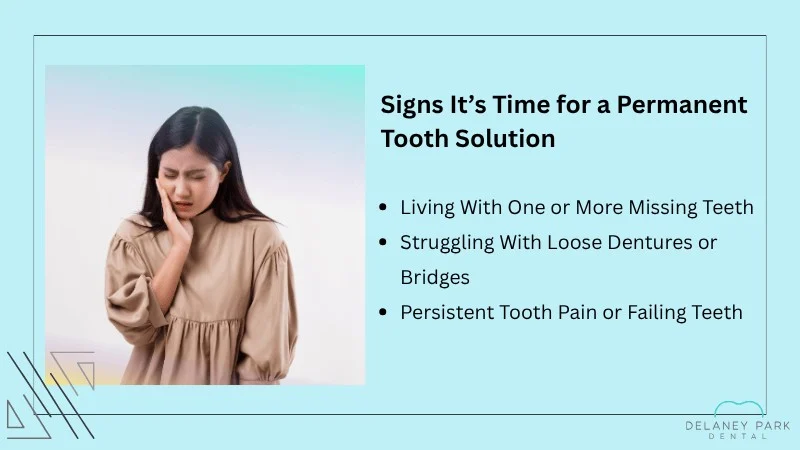
Living With One or More Missing Teeth
Missing teeth create more problems than just gaps in your smile. When you lose a tooth, the surrounding teeth can shift into the empty space over time. This movement changes your bite and can make chewing less effective.
Your jawbone also begins to shrink in areas where tooth loss has occurred. The bone needs stimulation from tooth roots to maintain its density and shape. Without this stimulation, you may notice changes in your facial structure.
Each missing tooth affects how you eat and speak. You might avoid certain foods that are hard to chew or feel self-conscious when talking to others.
These daily challenges often signal that you’re ready for a permanent solution like dental implants rather than temporary fixes.
Struggling With Loose Dentures or Bridges
Removable dentures that slip while you eat or talk create ongoing frustration. You shouldn’t need to rely on adhesives just to keep your dentures in place during normal activities.
A loose bridge can cause soreness and irritation in your gums. When bridges fail repeatedly or require frequent repairs, they’re telling you the underlying support isn’t stable enough.
This instability affects your confidence and limits what you can eat comfortably.
Dentures that don’t fit well may change how you pronounce certain words. They can also create pressure points that make eating uncomfortable or painful.
If you find yourself avoiding social situations because of concerns about your dentures moving, permanent tooth replacement options deserve consideration.
Persistent Tooth Pain or Failing Teeth
Ongoing tooth pain often means damage has progressed beyond what simple treatments can fix. When a tooth has severe decay or a crack that reaches the root, extraction may be your only option.
Teeth that have had multiple root canals or large fillings sometimes fail despite your best efforts to save them. A tooth extraction leaves you with a gap that needs replacement to prevent the problems mentioned earlier.
If your dentist has told you a tooth can’t be saved, planning for replacement before the extraction helps you avoid complications.
An implant consultation can help you understand your options and create a treatment plan that fits your situation and goals.
Functional and Health Warning Signs
Your body often signals when something is wrong with your teeth, and paying attention to these warning signs can help you decide if it’s time to consider a permanent solution.
Physical changes in how you eat, speak, or maintain your mouth can point to deeper problems that need attention.

Difficulty Chewing or Speaking Normally
When you start avoiding certain foods or notice that talking feels different, your teeth might be failing. Missing or damaged teeth make it hard to bite through tougher foods like apples, meat, or raw vegetables.
You might find yourself cutting food into smaller pieces or choosing softer options.
Your chewing ability affects more than just meals. Poor chewing function can limit the nutrients you get from food. If you can’t properly break down what you eat, your body struggles to absorb vitamins and minerals.
Speaking clearly depends on your teeth too. The sounds you make when saying words like “this” or “south” require your tongue to touch your teeth.
Gaps or loose teeth change how air flows through your mouth. You might notice a lisp or whistling sound when you talk.
Changes in Jawbone or Facial Structure
Your jaw bone needs stimulation from tooth roots to stay healthy. When teeth go missing, the bone beneath them starts to shrink. This bone loss happens gradually but can change how your face looks over time.
You might notice your cheeks looking sunken or your chin appearing more pointed. The distance between your nose and chin may decrease. These changes happen because the jaw bone that once supported your teeth has gotten smaller.
Bone loss also affects nearby teeth. When one area loses bone support, neighboring teeth can become loose or shift position. This creates a cycle where more teeth become at risk.
Bad Breath, Gum Disease, or Oral Health Issues
Persistent bad breath (halitosis) that doesn’t go away with brushing and flossing often signals deeper problems. Bacteria can collect around damaged teeth or in gaps where teeth are missing.
Regular cleaning can’t always reach these problem spots.
Gum disease starts as gingivitis, which causes red, swollen gums that bleed easily. Without treatment, it progresses to periodontal disease. This serious condition damages the tissues and bone that hold your teeth in place.
Failing teeth or poorly fitting dentures create spaces where food particles and bacteria gather. You might also experience recurring infections or sore spots that won’t heal.
A tooth fracture can expose the inner parts of your tooth to bacteria, leading to infection and more damage.
Assessing Candidacy for Permanent Tooth Replacement
Your dentist will evaluate several important factors to determine if you’re a good fit for permanent tooth replacement.
These factors include your overall health status, the condition of your jawbone, and your daily oral care habits.
Evaluating Oral and General Health
Your dentist needs to check both your mouth and overall health before moving forward with treatment. Being a candidate for dental implants means your oral health and general health can support the procedure safely.
A dental x-ray helps your dentist see what’s happening beneath your gums. This shows any hidden problems like infections or decay that need treatment first. You’ll also discuss your medical history during treatment planning.
People with controlled conditions like diabetes or high blood pressure can often get permanent tooth replacements. The key word is controlled.
Your doctor needs to make sure these conditions are well-managed before starting any dental procedure.
Gum disease must be treated before placement. Healthy gums create the foundation for successful results.
Bone Quality and the Need for Grafting
The strength and amount of bone in your jaw determines what type of treatment you can receive. Your jawbone needs enough density to hold a permanent replacement securely in place.
A dental x-ray or CT scan shows your dentist the exact bone quality you have. If your bone is too thin or weak, you might need a bone graft first. A bone graft adds material to your jaw to make it stronger and thicker.
The good news is that advanced implant techniques now allow treatment even when you have limited bone. Some options don’t require bone grafting at all.
Your dentist will explain which approach works best for your situation during treatment planning.
Bone loss happens naturally after losing a tooth. The longer you wait, the more bone you lose.
Commitment to Oral Hygiene
Your daily habits play a huge role in long-term success. Permanent tooth replacements need the same care as your natural teeth.
You must commit to brushing and flossing every single day. Brush at least twice daily for two minutes each time. Floss once a day to remove food and bacteria between teeth.
Regular dental checkups help catch problems early before they become serious. Most dentists recommend visits every six months. These appointments include professional cleanings you can’t do at home.
Poor oral hygiene leads to infections that can cause permanent tooth replacements to fail. If you struggle with brushing and flossing now, talk to your dentist about strategies to improve.
They can suggest tools like electric toothbrushes or water flossers that make cleaning easier.
Permanent Tooth Replacement Options Explained
Modern dentistry offers several ways to replace missing teeth, each with different levels of permanence, cost, and invasiveness.
Dental implants serve as artificial tooth roots, while bridges and dentures provide alternative solutions that work differently in your mouth.



Dental Implants: Steps and Success Factors
The dental implant procedure involves placing a titanium implant post into your jawbone during implant surgery. Your dentist will first evaluate your bone health through imaging and create a treatment plan.
During implant placement, the titanium post is surgically positioned where your missing tooth used to be.
After surgery, osseointegration begins. This is when your jawbone fuses with the titanium implant over several months, creating a stable foundation.
Once healing is complete, your dentist attaches an abutment to connect the implant post to your final restoration.
The last step involves placing a dental crown on top of the abutment. This crown looks and functions like your natural tooth. Some patients may need bone grafting before implants if they have experienced bone loss.
Understanding permanent tooth replacement options helps you know what to expect during each phase of treatment.
Comparing Bridges, Dentures, and Implants
Each tooth replacement option works differently in your mouth:
Dental Implants
- Fixed permanently in your jawbone
- Don’t require altering nearby teeth
- Help prevent bone loss
- Can last decades with proper care
Dental Bridges
- Attach to surrounding teeth for support
- Require filing down healthy teeth
- Fixed in place but don’t replace tooth roots
- Typically last 5-15 years
Dentures
- Removable prosthetic teeth and gums
- Rest on your gums with suction or adhesives
- Most affordable upfront option
- May feel loose or require adhesives
Comparing dentures vs implants depends on your health, budget, and lifestyle needs. Implants provide the most tooth-like experience but cost more initially. Dentures offer an economical choice but may affect how you eat or speak.
Benefits and Long-Term Value of Permanent Tooth Replacement
Permanent tooth replacement does more than fill gaps in your smile. It protects your jaw health and gives you back the ability to eat, speak, and smile without worry.

Restored Chewing, Confidence, and Appearance
When you replace missing teeth with permanent options like dental implants, you get back full chewing function. You can eat tough foods like steak or apples without pain or difficulty.
Your appearance improves too. Implants look and feel like natural teeth, so you won’t have visible gaps or metal clasps showing when you smile. This restored appearance often boosts your confidence in social and work settings.
The benefits of dental implants extend to your daily comfort. Unlike removable dentures that can slip or cause sore spots, permanent replacements stay firmly in place. You don’t need to worry about your teeth moving when you laugh or talk.
These improvements affect your quality of life for years or even decades with proper care.
Preventing Bone Loss and Further Dental Issues
Your jawbone needs stimulation from tooth roots to stay healthy. When you lose a tooth, the bone in that area starts to shrink over time.
Dental implants prevent bone loss because they act like natural tooth roots. The implant post stimulates your jawbone, keeping it strong and healthy.
This preserves your facial structure and prevents the sunken look that can happen with bone loss.
Successful implant placement also protects your other teeth. When you have gaps, nearby teeth can shift out of position, causing bite problems and making cleaning harder. This can lead to more tooth decay and gum disease.
Replacing missing teeth stops this chain reaction and helps keep your remaining natural teeth healthy.
Taking the Next Step: Consultation and Treatment Planning
Your first appointment sets the foundation for your entire dental implant process, where you’ll learn exactly what to expect and receive a custom plan designed around your specific needs.
What to Expect at Your Implant Consultation
Your implant consultation typically lasts between 30 minutes to an hour. During this visit, your dentist will review your complete medical and dental history to identify any factors that might affect treatment success.
You’ll receive X-rays or a 3D CT scan to evaluate your jawbone density and structure. These images help your dentist determine if you have enough bone to support an implant or if you’ll need additional procedures first.
Your dentist will examine your gums, remaining teeth, and bite alignment. This helps them understand how your new tooth will fit with your existing teeth and ensures proper function.
You’ll have time to discuss your goals, ask questions about the procedure, and learn about costs and payment options. Many practices offer detailed treatment planning that outlines every step you’ll take.
Creating a Personalized Tooth Replacement Plan
After your consultation, your dentist develops a customized treatment plan based on your specific situation.
This plan includes the number of implants you need, the type of restoration that works best, and the complete timeline from start to finish.
Your plan will outline whether you need any preparatory procedures. Some patients require tooth extraction, bone grafting, or gum treatment before implant placement can occur.
You’ll receive a clear breakdown of each phase, including healing times between appointments. Most plans span 3 to 9 months depending on your individual needs and whether additional procedures are necessary.
Your dentist will explain what type of crown, bridge, or denture will attach to your implant. They’ll also discuss temporary options you can wear during the healing process so you’re never without teeth.
Frequently Asked Questions
Missing teeth can create questions about your health, comfort, and treatment options. Understanding what changes to look for and when to seek help can make the decision process easier.
How do I know if my missing tooth is starting to affect my bite or the way I chew?
You might notice that you’re favoring one side of your mouth when you eat. Foods that used to be easy to chew may now feel uncomfortable or require more effort.
Pay attention to whether your jaw feels tired after meals or if you’re avoiding certain textures entirely.
If you catch yourself cutting food into smaller pieces than before or struggling with foods like steak or apples, your bite or chewing function may be changing.
Some people also notice clicking or popping sounds in their jaw joint. These signs suggest that your bite has shifted since losing your tooth.
What are the most common signs that my jawbone or gums are changing after tooth loss?
You may notice that your face looks different than it used to, especially around your cheeks or jaw. The bone that once supported your tooth can shrink over time when there’s no tooth root to stimulate it.
Your gums might look different in the area where you lost a tooth. They could appear sunken or uneven compared to areas with teeth.
Some people see changes in how their lips sit or notice new wrinkles forming around their mouth. Bone changes can occur after tooth loss and sometimes affect facial structure, which is why timing matters when considering replacement options.
When is it time to stop using a temporary fix and consider a long-term replacement instead?
If you’re using denture adhesives multiple times per day just to keep your teeth in place, that’s a clear sign. Constant repairs or adjustments to your bridge or partial denture also suggest your current solution isn’t working well anymore.
You should consider a more permanent option when your temporary fix starts limiting what you can eat or do. If you feel self-conscious in social situations because you worry about your teeth slipping or falling out, it’s time to explore other choices.
Ongoing repairs can signal that the underlying structure isn’t stable. A long-term solution can save you from the hassle and expense of frequent fixes.
What should I know before deciding if dental implants are right for me?
Dental implants work as artificial tooth roots that are placed in your jawbone. They typically include the implant post, a connector piece called an abutment, and the visible crown or restoration.
You need to have enough healthy jawbone to support the implant, though bone grafting may be an option if you don’t. Your overall health matters too, as certain conditions can affect healing.
Dental implants are not right for everyone. A consultation with imaging and a review of your health history helps determine if they’re appropriate for you.
You should also consider the cost, time commitment for the procedure, and your personal goals for treatment.
How can I tell if my denture or bridge no longer fits well enough and needs a more stable option?
Sore spots that develop regularly are a major sign your denture or bridge isn’t fitting properly anymore. If you have to avoid certain foods because your restoration feels unstable, that’s another indicator.
You might notice that speaking clearly has become harder or that you avoid smiling in photos. Some people experience frequent irritation on their gums or cheeks from rubbing.
Loose dentures, sore spots, or reliance on adhesives are common concerns that signal it may be time for a different approach.
When adjustments and relines no longer help, a more stable tooth replacement option could improve your daily comfort.
Does age affect whether I’m a good candidate for a permanent tooth replacement?
Age alone doesn’t determine whether you can get dental implants or other permanent replacements. Your overall health and bone quality matter much more than the number on your birthday cake.
Older adults can be excellent candidates if they’re in good general health and have adequate bone support.
Younger patients may need to wait until their jaw has finished growing, which usually happens in the late teens or early twenties.
What really matters is whether you have conditions that affect healing, such as uncontrolled diabetes or certain bone disorders.
Your dentist will evaluate your individual situation rather than making decisions based on age alone.