Skip to content




Feeling nervous about an upcoming oral surgery is completely normal. Many people experience worry about pain, the procedure itself, or what recovery will be like.
The good news is that there are proven ways to calm your nerves and make the experience much easier.
You can manage dental anxiety through a combination of preparation, relaxation techniques, sedation options, and open communication with your oral surgeon.
Understanding what will happen during your procedure takes away much of the fear that comes from the unknown. When you know what to expect and have a plan to stay calm, you’ll feel more in control.
Managing anxiety before and after oral surgery starts well before you sit in the dental chair. From choosing the right sedation method to practicing breathing exercises at home, small steps can make a big difference in how you feel.
This guide will walk you through everything you need to know to approach your oral surgery with confidence instead of fear.
Key Takeaways
- Learning about your procedure and discussing sedation options with your surgeon helps reduce fear of the unknown
- Relaxation techniques like deep breathing and visualization can calm your nerves before and during surgery
- Following post-operative instructions carefully and maintaining a support system promotes faster healing and reduces recovery anxiety
Talk to a dental professional about personalized sedation solutions for a stress-free procedure.
Understanding Dental Anxiety in Oral Surgery
Dental anxiety affects how you experience oral surgery, from the moment you schedule your appointment to your recovery.
Recognizing what triggers your fear and how it differs from dental phobia helps you take the right steps toward a calmer surgical experience.
What Is Dental Anxiety and Dental Phobia?
Dental anxiety is the worry or stress you feel when thinking about visiting the dentist or undergoing dental procedures. It’s a common emotional response that many people experience before oral surgery.
Dental phobia, also called odontophobia, is more severe. It’s an intense, overwhelming fear that can cause you to avoid dental care completely.
While anxiety makes you uncomfortable, phobia can trigger extreme reactions like panic attacks or feelings of terror.
The key difference is in how these feelings affect your behavior. If you feel nervous but still attend your appointments, you likely have dental anxiety.
If you cancel appointments repeatedly or only seek care during emergencies, you may be dealing with dental phobia.
Both conditions are real and valid. They’re not signs of weakness, and you’re not alone in experiencing them.
How Dental Anxiety Impacts Oral Surgery
Your anxiety during oral surgery can affect both your physical responses and treatment outcomes.
When you’re anxious, your body releases stress hormones that can increase your heart rate, blood pressure, and muscle tension.
Anxiety can make you perceive more pain during procedures, and the discomfort often lasts longer in your memory. This creates a difficult cycle where past anxious experiences make future visits even harder.
High anxiety levels may cause you to:
- Avoid necessary procedures until problems worsen
- Move or tense up during surgery, making the dentist’s work harder
- Need more time and resources for your treatment
- Experience physical exhaustion after appointments
Fear of oral surgery can delay tooth replacement and other important treatments. This avoidance leads to worse oral health problems that require more complex procedures later.
Common Triggers: Fear of Pain, Anesthesia, and the Unknown

Fear of pain ranks as one of the strongest triggers for anxiety before oral surgery. You might worry about feeling discomfort during the procedure or experiencing pain during recovery.
Concerns about anesthesia are also common. You may wonder if the numbing will work properly, worry about needles, or fear the loss of control that comes with sedation.
The uncertainty about what will happen during your procedure often amplifies your anxiety. Not knowing what to expect creates mental scenarios that are usually worse than reality.
Other frequent triggers include:
- Sounds and smells in the dental office
- Lying back in a vulnerable position in the dental chair
- Past negative experiences with dental procedures
- Feeling helpless or unable to communicate during treatment
- Fear of gagging or choking during the procedure
Preparing for Oral Surgery with Anxiety in Mind
Getting ready for oral surgery involves more than just the physical aspects.
Taking specific steps to address your anxiety can make a real difference in how you experience procedures like tooth extraction, dental implants, or maxillofacial surgery.
Educating Yourself About the Procedure
Learning about what will happen during your oral surgery helps reduce fear of the unknown. Ask your oral surgeon to explain each step of your specific procedure, whether it’s a tooth extraction or dental implants.
Find out how long the surgery will take and what sensations you might feel. Understanding the difference between pressure and pain can ease your worries.
Your surgeon can describe what tools they’ll use and why each step matters for your treatment.
Ask about the type of anesthesia you’ll receive and how it will make you feel. Knowing when you’ll be numb and how long it lasts gives you a sense of control.
You can also request to see photos or diagrams of the procedure if visual information helps you feel more prepared.
Avoid searching online for scary stories or extreme cases. Stick to reliable medical sources or information your oral surgeon provides directly.
Communicating With Your Oral Surgeon
Open and honest conversation with your oral surgeon creates a foundation for managing anxiety before oral surgery. Tell them exactly what makes you nervous, whether it’s needles, sounds, or loss of control.
Your surgeon can adjust their approach based on your specific fears. They might explain each step before doing it or use hand signals so you can communicate during the procedure.
Some offices offer noise-canceling headphones or let you listen to music.
Discuss sedation options that match your anxiety level. Nitrous oxide provides mild relaxation, while oral sedation or IV sedation offers deeper calming effects. Your surgeon will help you choose what’s right for your procedure and comfort needs.
Don’t hold back questions, even if they seem simple. Ask about recovery time, pain management, and what to do if something feels wrong. Getting clear answers now prevents unnecessary worry later.
Creating a Supportive Environment
Bringing someone you trust to your appointment provides emotional comfort. A friend or family member can wait for you, drive you home, and help you remember post-surgery instructions when you’re still groggy.
Before your surgery:
- Arrange time off work to avoid rushing
- Prepare your recovery space at home with soft foods and entertainment
- Lay out comfortable clothes for the day of surgery
- Pack a small bag with items that comfort you
Items to consider bringing:
- Headphones for calming music
- A stress ball or fidget item
- A cozy blanket or sweater
- Chapstick for dry lips
Plan something enjoyable for after you’ve healed, like a favorite meal or activity. Having a reward waiting gives you something positive to focus on instead of the surgery itself. This helps shift your mindset from dread to looking forward.
Relaxation Techniques for Managing Anxiety
Learning to calm your mind and body before oral surgery can make a real difference in how you feel. These proven methods work by activating your body’s natural relaxation response and reducing physical tension.
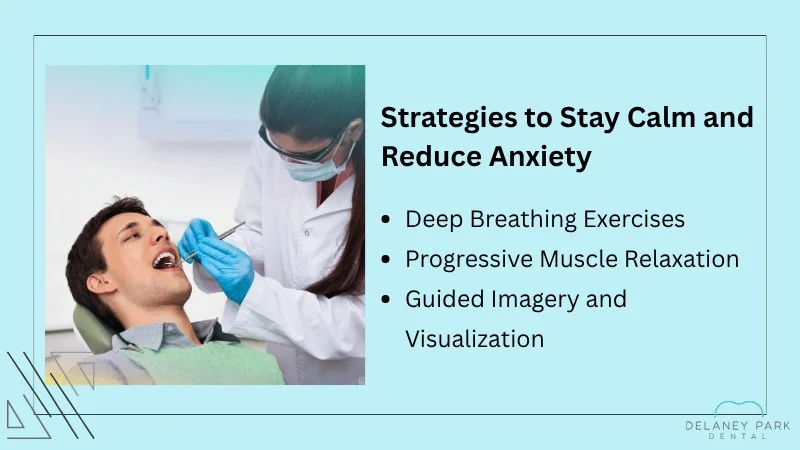
Deep Breathing Exercises
Deep breathing is one of the easiest ways to lower anxiety quickly. When you breathe slowly and deeply, you signal your nervous system to calm down.
Try the 4-7-8 technique by breathing in through your nose for four counts, holding your breath for seven counts, and exhaling through your mouth for eight counts. Repeat this cycle three to four times.
You can practice this method in the waiting room or even while sitting in the dental chair. Another option is diaphragmatic breathing, where you focus on making your belly rise and fall instead of your chest.
This type of breathing sends more oxygen to your body and helps reduce the physical symptoms of anxiety like a racing heart or sweaty palms.
Progressive Muscle Relaxation
Progressive muscle relaxation involves tensing and releasing different muscle groups in your body. This technique helps you notice where you’re holding tension and teaches you how to let it go.
Start by tensing the muscles in your feet for five seconds, then release them completely. Move up to your calves, then your thighs, continuing through your whole body until you reach your face and jaw.
The contrast between tension and relaxation makes it easier to recognize what a relaxed state feels like. Many people find this especially helpful for managing dental anxiety because jaw tension is common when you’re nervous.
You can do this exercise the night before your surgery or in the waiting area.
Guided Imagery and Visualization
Guided imagery uses your imagination to create a peaceful mental scene that distracts you from anxious thoughts. Picture yourself in a place where you feel completely safe and relaxed, like a beach or a quiet forest.
Focus on the details. What do you see, hear, and smell in this place? The more specific you make the image, the more effective it becomes.
You can listen to recorded guided imagery sessions or create your own mental picture. Some people combine this with deep breathing for even better results.
This technique works well both before and during your procedure, as it gives your mind something positive to focus on instead of the surgery itself.
Sedation Options for Dental Anxiety
Sedation dentistry uses medication to help you feel calm and relaxed during dental procedures. You have several sedation options ranging from mild relaxation with nitrous oxide to complete unconsciousness with general anesthesia.
Local Anesthesia and Its Role
Local anesthesia numbs a specific area of your mouth so you don’t feel pain during your oral surgery. Your dentist injects the medication directly into your gums or cheek near the treatment site.
You stay fully awake and aware during the procedure when you receive local anesthesia. This option works well for simple procedures like tooth extractions or fillings. The numbing effect typically lasts for a few hours after your appointment.
Many dentists combine local anesthesia with other sedation methods to manage both pain and anxiety. For example, you might receive nitrous oxide to help you relax while local anesthesia blocks the pain.
This combination gives you comfort without putting you completely to sleep.
Exploring Sedation Dentistry
Nitrous oxide, also called laughing gas, is the mildest form of dental sedation. You breathe it through a mask placed over your nose, and it helps you feel relaxed while staying fully awake.
The effects wear off quickly after your dentist removes the mask.
Oral sedation involves taking a prescribed benzodiazepine pill before your appointment. This medication makes you drowsy and calm, though you remain conscious throughout the procedure.
You’ll need someone to drive you home since the effects can last several hours.
IV sedation delivers medication directly into your bloodstream through a vein in your arm. This method produces moderate to deep conscious sedation, meaning you might drift in and out of consciousness but can still respond to your oral surgeon.
Your dentist can adjust the sedation level quickly during your procedure to keep you comfortable.
General Anesthesia for Severe Cases
General anesthesia makes you completely unconscious during your oral surgery. You won’t be aware of anything happening and won’t remember the procedure afterward.
Your oral surgeon typically recommends general anesthesia for complex surgeries or if you have extreme dental anxiety. This option requires special equipment to monitor your breathing, heart rate, and other vital signs throughout the procedure.
An anesthesiologist or specially trained dentist manages your sedation from start to finish.
You’ll need to avoid eating or drinking for several hours before your surgery. Someone must drive you home and stay with you for at least a few hours after your appointment since the medication takes time to wear off completely.
Practical Tips for Reducing Anxiety Before and During Surgery
Taking practical steps to manage your nervousness can make a real difference in your oral surgery experience.
Working closely with your dental team, bringing items that help you relax, and having someone you trust nearby are proven ways to ease worry.
Building a Trusting Relationship With Your Dental Team
Your relationship with your oral surgeon sets the tone for your entire experience. Start by having an open conversation about your specific fears and concerns before the procedure day arrives.
When you share what makes you anxious, your surgeon can adjust their approach to meet your needs. Ask questions about each step of the surgery and what sensations you might feel.
Understanding exactly what will happen removes the fear of the unknown.
Your dental team can also explain pain management options in detail. They want you to feel comfortable and will take time to address every concern you have.
Trust builds when you feel heard and when your surgeon shows they care about your comfort, not just completing the procedure.
Distraction Methods: Music and Comfort Items
Bringing familiar items from home can provide comfort during your procedure. Consider using headphones to play calming music or an audiobook that takes your mind elsewhere.
Many patients find that focusing on something pleasant helps them stay relaxed.
You might bring a stress ball to squeeze or wear comfortable clothing that makes you feel at ease. Some oral surgery offices allow you to bring a favorite blanket or pillow.
Talk to your dental team ahead of time about what items they allow in the treatment room. Music works especially well because it blocks out clinical sounds that might increase worry.
The Benefits of a Support System
Having a trusted friend or family member in the waiting room provides emotional comfort before and after surgery. Just knowing someone you care about is nearby can reduce stress levels.
Your support person can also help you get home safely after the procedure. They can listen to post-surgery instructions when you might be groggy from sedation.
Some dental offices even allow a companion to stay with you during simpler procedures.
Choose someone who stays calm under pressure and makes you feel safe. Their positive attitude can help shift your mindset from worried to confident as you prepare for treatment.
Supporting Recovery and Maintaining Long-Term Oral Health
Recovery after oral surgery involves both physical healing and emotional well-being. Pain management, proper aftercare, and addressing the root causes of dental fear can help you maintain better oral health for years to come.

Managing Postoperative Pain and Discomfort
Your dentist will prescribe pain medication to keep you comfortable during recovery. Take these medications exactly as directed, even before the numbing wears off completely.
Ice packs applied to your face can reduce swelling and numb the area. Apply ice for 15 minutes on and 15 minutes off during the first 24 hours. After that, switch to warm compresses if needed.
Common pain management approaches include:
- Over-the-counter pain relievers like ibuprofen
- Prescription medications for moderate to severe pain
- Cold therapy for swelling reduction
- Elevation of your head while sleeping
Many patients find that managing postoperative pain reduces anxiety about future procedures. When you experience less discomfort than expected, it builds confidence for your next dental visit.
Contact your dental office immediately if pain worsens after the third day or if you develop fever, excessive bleeding, or signs of infection.
Following Aftercare Instructions
Your recovery depends on following specific care instructions from your oral surgeon. Eat only soft foods like yogurt, applesauce, and mashed potatoes for the first few days.
Avoid using straws, smoking, or spitting forcefully. These actions can dislodge blood clots and cause painful dry socket. Keep the surgical area clean by gently rinsing with warm salt water after 24 hours.
Essential aftercare steps:
- Rest for at least 24-48 hours after surgery
- Keep gauze pads in place as directed
- Brush carefully around the surgical site
- Attend all follow-up appointments
Taking prescribed antibiotics until completely finished prevents infection. Missing doses or stopping early can lead to complications that extend your recovery time.
Preventing Future Dental Anxiety
Understanding what triggered your anxiety helps you prepare for future visits. Write down specific concerns and share them with your dentist before your next appointment.
Creating positive experiences at the dentist builds trust and reduces fear over time. Schedule regular check-ups to catch problems early, which often means simpler treatments.
Many dental practices now offer anxiety management techniques specifically designed for nervous patients. Ask about relaxation methods, sedation options, or distraction tools available at your dental office.
Consider joining a support group or working with a therapist if dental fear significantly impacts your oral health. Professional help can address deeper phobias that prevent you from seeking necessary care.
Regular dental visits become easier when you maintain good home care. Brush twice daily and floss to reduce the need for extensive procedures.
Frequently Asked Questions
Many people have similar questions about managing their nerves before and during dental procedures.
Understanding your options for calming techniques, sedation choices, and how to communicate with your care team can make a real difference in your experience.
What can I do to feel calmer before an oral surgery appointment?
Start by learning as much as you can about what will happen during your procedure. Ask your dentist or oral surgeon to walk you through each step so you know what to expect.
Try deep breathing exercises in the days leading up to your appointment. Breathe in slowly through your nose for four counts, hold for four counts, and breathe out through your mouth for six counts.
Get a good night’s sleep before your surgery. Avoid caffeine on the day of your appointment since it can increase feelings of nervousness.
Bring headphones and listen to calming music or a podcast during the procedure. Many patients find that modern dentistry offers comfort-focused approaches that include distraction techniques.
What are the best ways to stay calm during a tooth extraction?
Focus on your breathing throughout the procedure. Taking slow, steady breaths helps activate your body’s natural relaxation response.
Use a stress ball or squeeze your hands together gently. This gives you something to focus on besides what’s happening in your mouth.
Ask your dentist to explain what they’re doing as they work, or request that they stay quiet if explanations make you more nervous. Communication about your preferences matters.
Guided imagery can help too. Picture yourself in a place that makes you feel peaceful, like a beach or a quiet forest.
How do dentists decide whether I might benefit from sedation or anti-anxiety medication?
Your dentist will consider how severe your anxiety is and what type of procedure you need. They’ll ask about your medical history and any medications you currently take.
The length and complexity of your surgery plays a role in this decision. Longer procedures often work better with sedation options that keep you comfortable throughout the appointment.
Your dentist will discuss different levels of sedation with you. Options range from mild sedation with nitrous oxide to deeper sedation through an IV.
Some medical conditions might affect which sedation methods are safe for you. Be honest about your health history so your care team can make the best recommendation.
Can therapy approaches like CBT help with dental fear, and how would I get started?
Cognitive behavioral therapy (CBT) has shown good results for people with dental anxiety. This type of therapy helps you identify negative thought patterns and replace them with more realistic ones.
CBT teaches you specific coping skills you can use before and during dental appointments. You learn to challenge thoughts like “this will be unbearable” and replace them with “I can handle this with the right support.”
To get started, ask your regular doctor for a referral to a therapist who specializes in anxiety or phobias. Some dental practices also have relationships with mental health professionals who understand dental fear specifically.
Management strategies for dental anxiety include behavioral approaches that modify your experience through learning. These techniques have minimal side effects compared to medication alone.
How is dental anxiety measured, and what does a score on an anxiety scale mean?
Dentists often use questionnaires that ask about your feelings toward different aspects of dental care. You might rate your anxiety level for things like seeing the dental drill or sitting in the dental chair.
The Modified Dental Anxiety Scale is one common tool. It asks five questions and your answers add up to a total score between 5 and 25.
A score of 9 or higher suggests you have dental anxiety. Scores of 15 or above indicate severe anxiety that probably affects your ability to get dental care.
These scores help your dental team understand how much support you need. They’re not about judging you but about finding the right approach for your care.
What should I tell my oral surgeon if I’m panicking or afraid I might not cope during the procedure?
Tell your oral surgeon about your fear as soon as possible, ideally before the day of surgery. Being upfront helps them prepare and adjust their approach.
Explain what specifically worries you most. Is it the needles, the sounds, feeling trapped, or something else? This information helps them address your particular concerns.
Let them know if you’ve had bad experiences with dental work in the past. Understanding your history helps them avoid triggering situations.
Ask about establishing a signal you can use during the procedure if you need a break. Many surgeons will agree to stop if you raise your hand or make another predetermined gesture.
Your oral surgeon should provide detailed information about what will happen before, during, and after the surgery. Don’t hesitate to ask questions about anything that concerns you.