Skip to content



Missing teeth can make you feel self-conscious about your smile and affect your ability to eat comfortably.
Traditional dental implants require multiple appointments spread over several months, which means more time off work and a longer wait for your new smile.
Same-day dental implants offer a faster solution that lets you walk out with a temporary tooth on the same day as your implant surgery.
You may be one of the ideal same day dental implant candidates if you have good oral health, sufficient jawbone density, and healthy gums that can support immediate implant placement.
Your dentist will need to evaluate several factors including how stable the implant can be when first placed and whether your bite alignment allows for immediate restoration.
Many patients qualify for same-day dental implants even if they were previously told they weren’t candidates for traditional implants.
Same-day dental implants involve placing a temporary crown or bridge onto the implant post during your first visit.
This process can often be completed in a single appointment, giving you a complete smile without the months of waiting.
Understanding what makes someone eligible for this treatment can help you decide if it’s the right choice for your dental needs.
Key Takeaways
- Same-day dental implants let you receive both the implant and temporary tooth in one appointment
- Good bone density and healthy gums are essential requirements for qualifying for immediate placement
- The temporary restoration is replaced with a permanent crown after your implant fully heals
Table of Content
- Understanding Same-Day Dental Implants
- Key Candidacy Requirements
- Bone Grafting and Jawbone Factors
- Treatment Timeline: From Temporary to Permanent Restoration
- Expected Outcomes and Longevity of Results
- Frequently Asked Questions
Understanding Same-Day Dental Implants
Same-day dental implants let you walk out of the dentist’s office with a functional tooth on the same day as your implant surgery.
The process works differently than traditional implants because you receive a temporary crown right away instead of waiting months for your jaw to heal.
Immediate Load vs. Traditional Dental Implants
Traditional implants require multiple visits spread across 5 to 10 months. First, your dentist extracts the damaged tooth and waits 2 to 4 months for the socket to heal.
Next, they insert the implant and wait another 3 to 6 months for osseointegration, which is when the implant fuses with your jawbone. Finally, they place the permanent crown.
Same-day implants work much faster. You attend an initial consultation to check if you qualify. Then, during one appointment, your dentist removes the tooth, places the implant, and attaches a temporary crown.
You skip the long healing periods between steps.
The success rates between both methods show little difference. Research found that treatment success rates and bone stability were statistically similar between same-day and conventional implants.
What to Expect From the Same-Day Procedure
Your same-day appointment will take longer than a regular dental visit since everything happens at once.
The dentist extracts any damaged teeth first, then immediately places the titanium implant posts into your jawbone. These posts act as artificial tooth roots.
After securing the implants, your dentist attaches temporary crowns to give you working teeth right away. You leave the office with a complete smile instead of gaps.
The temporary restoration protects the implant site while your jaw heals around the metal posts.
You may experience more swelling and discomfort after same-day implants compared to traditional approaches. Your dentist will give you specific care instructions and pain management guidance.
Plan to eat soft foods for several weeks while healing.
Role of Temporary Crowns in Immediate Restoration
The temporary crown serves multiple important functions during your healing process. It keeps contaminants and bacteria away from the extraction socket, which helps prevent infection.
The crown also helps your gums heal faster and reduces the chance of gum recession.
Your temporary crown isn’t as strong as the permanent restoration you’ll receive later. You need to be careful with it by avoiding hard or sticky foods that could damage or dislodge it.
The temporary crown maintains proper spacing between your teeth and keeps your bite aligned.
After several months of osseointegration, your dentist replaces the temporary crown with a permanent restoration.
The permanent crown is stronger, looks more natural, and is designed to last for many years with proper care.
Key Candidacy Requirements
Your ability to get same-day dental implants depends on your overall health, the condition of your mouth, and how well your dental team can plan the procedure.
Dentists look at several factors before deciding if you qualify for this faster approach.
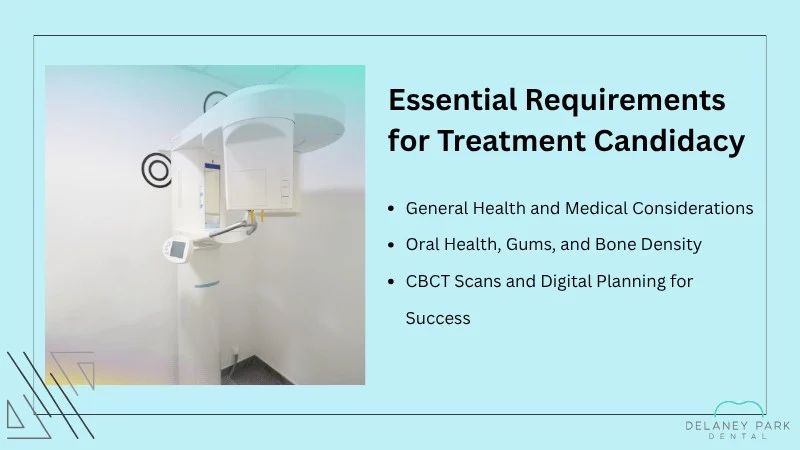
General Health and Medical Considerations
Your body’s ability to heal plays a major role in implant success. Certain health conditions can slow down healing or increase the risk of complications after surgery.
Conditions that may affect candidacy include:
- Diabetes – If your blood sugar is well controlled, you can still be a good candidate. Uncontrolled diabetes may slow healing and affect osseointegration.
- Smoking – Tobacco use reduces blood flow to your gums and can lower implant success rates significantly.
- Autoimmune disorders – Conditions that affect your immune system may require extra planning with your doctor.
- Medications – Some drugs like bisphosphonates or steroids can impact bone healing.
Your dentist will review your medical history during the consultation. They may work with your doctor to make sure your conditions are managed well before moving forward.
This coordination helps protect your health and gives your implant the best chance to succeed.
Oral Health, Gums, and Bone Density
Your mouth needs to be in good shape for same-day implants to work. Healthy gums and sufficient bone density are essential for the implant to stay stable during healing.
Active gum disease must be treated first. Infection or inflammation around the implant site can lead to failure. Your dentist will check for signs of periodontal disease and recommend treatment if needed.
Bone density determines whether the implant can lock into place securely on the first day. If you don’t have enough bone, you may need grafting before getting implants.
Insufficient bone density is one of the key factors affecting same-day dental implant candidacy.
The extraction site also matters. If you’re having a tooth removed and an implant placed the same day, the area needs to be free of infection with adequate bone remaining.
CBCT Scans and Digital Planning for Success
Modern imaging makes same-day implants safer and more predictable. A CBCT scan creates a 3D view of your jaw that shows bone quality, nerve locations, and sinus positions.
This scan lets your dentist measure bone height and width precisely. They can plan the exact position and angle of your implant before surgery starts.
Digital planning reduces guesswork and helps avoid complications during the procedure.
The scan also reveals if you have enough bone for strong initial stability. Without this stability, the implant may move during healing and fail to integrate properly.
Your dentist uses this information to decide if same-day loading is safe or if a traditional staged approach is better for long-term success.
Some offices use the scan data to create surgical guides. These guides position the implant exactly where it needs to go, which improves accuracy and speeds up the procedure.



Bone Grafting and Jawbone Factors
Your jawbone quality directly determines whether you can get same-day implants or need additional procedures first. The amount and density of bone available affects how quickly you can move forward with treatment.
Bone Volume and Quality for Implant Stability
Your jaw needs enough bone height, width, and density for implants to succeed. Dentists measure these factors using a CBCT scan, which creates 3D images of your jaw structure.
This scan shows exactly how much bone you have and where it’s located.
For same-day implants, you typically need at least 10mm of bone height and adequate width to support the implant posts. The bone must also be dense enough to hold the implants securely during healing.
Without sufficient volume, the implants won’t achieve proper osseointegration, which is when the bone fuses to the implant surface.
Your bone density falls into different categories from soft to very dense. Denser bone provides better initial stability for immediate placement.
If you’ve been missing teeth for a long time, your bone may have shrunk through natural resorption.
Procedures When Bone Is Insufficient
Bone grafting helps rebuild your jawbone when there isn’t enough structure for implants. The graft material can come from your own body, a human donor, animal sources, or synthetic materials.
Most dental bone grafts cost between $200 and $3,000 depending on the materials used.
A socket graft happens right after tooth extraction to preserve bone. Block bone grafts address more severe bone loss by transplanting larger pieces of bone tissue.
Sinus lift procedures create space in your upper jaw by raising the sinus cavity before placing grafts.
Recovery from bone grafting typically takes four to six months before implants can be placed. You’ll need to follow a soft food diet and take prescribed antibiotics during initial healing.
Impact on Full-Arch and Complex Cases
Full-arch restoration presents unique challenges when bone loss exists. Your upper jaw often has less dense bone than your lower jaw, which affects treatment planning.
Bone loss in the upper jaw requires careful evaluation because the bone is naturally softer and the sinuses limit available space.
Modern techniques can sometimes work around bone loss for full-arch cases. Angled implants may be placed in areas with better bone quality to avoid grafting.
Special implant designs anchor in remaining bone even with reduced volume.
However, patients with significant bone loss may need grafting or advanced implants before full-arch treatment.
Your specific bone structure determines whether you qualify for same-day full-arch implants or need preliminary procedures first.
Wondering if you qualify for same-day dental implants? Book an evaluation and get expert answers.
Treatment Timeline: From Temporary to Permanent Restoration
The complete journey from same-day implants to your final teeth involves distinct phases, with temporary crowns protecting your implants during healing before permanent restorations are placed at 4-5 months.
Placement and Role of Temporary Crowns
Your temporary crown gets placed either on the same day as implant surgery or the day after, depending on your specific treatment plan. These temporary teeth aren’t just cosmetic.
They protect the implant site while your jawbone heals around the titanium post.
Temporary crowns following same-day procedures serve multiple important functions during the healing period. They maintain the space for your permanent tooth and keep the soft tissue properly shaped.
You’ll need to stick to a soft-food diet during this phase to avoid putting too much pressure on the healing implant.
Pre-designed temporary teeth fit better than dentures that get adapted chairside on surgery day. Your dentist creates these based on your jaw scans before surgery.
Osseointegration Period and Monitoring
Osseointegration is when your jawbone grows around and fuses with the implant. This process typically takes 3-6 months to complete. During this time, your bone cells attach to the titanium surface and create a strong, stable foundation.
You’ll have follow-up appointments so your dentist can check how well the implant is integrating. These visits help catch any issues early. Your dentist will examine the implant site and may take X-rays to confirm proper healing.
The healing period for osseointegration varies based on your bone quality and overall health. Upper jaw implants sometimes need more time than lower jaw implants because the bone is less dense.
Transition to Permanent Restoration
Once osseointegration is confirmed at 4-5 months, your dentist will replace the temporary crown with your permanent restoration.
This final tooth is typically made from stronger materials like zirconia or porcelain-fused-to-metal. These materials resist stains and handle normal chewing forces better than temporary materials.
The complete All-On-4 treatment process shows how full-arch cases follow a similar timeline from temporary to permanent teeth. Your permanent crown gets custom-designed to match your natural teeth in color, shape, and size.
After your permanent restoration is placed, you can return to eating normally. Zirconia restorations are hard-wearing and don’t degrade like acrylic temporary teeth do.
Expected Outcomes and Longevity of Results
Same-day dental implants can deliver results that last for decades when properly cared for, though success depends on factors like bone quality and following aftercare instructions.
Understanding how these implants compare to traditional methods and what to expect during healing helps you make an informed choice.
Success Rates Compared to Traditional Implants
Same-day dental implants have success rates between 94% and 98%, which is slightly lower than traditional implants that reach 97% to 99%.
The difference comes down to osseointegration, the process where your jawbone fuses with the implant.
Traditional implants wait several months before adding teeth, giving bone time to heal completely. Same-day procedures place the implant and attach a temporary tooth during one appointment, which can add stress during healing.
Your individual success rate depends on several factors:
- Bone density and quality at the implant site
- Overall health including conditions like diabetes
- Smoking status (smokers have lower success rates)
- Oral hygiene habits after the procedure
Most same-day implants that fail do so within the first few months. If your implant survives the initial healing period, it will likely last 20 years or longer with proper care.
Diet and Aftercare During Healing

Your diet plays a major role in whether your implant succeeds. You’ll need to eat soft foods for at least 6 to 8 weeks while osseointegration occurs. Hard or crunchy foods can disturb the implant before it bonds with your bone.
Safe foods during healing:
- Smoothies and protein shakes
- Scrambled eggs and soft fish
- Mashed vegetables and soups
- Yogurt and pudding
Avoid hot foods for the first 48 hours, as heat increases bleeding and swelling. Stay away from alcohol and tobacco completely during healing, since both slow bone growth around your implant.
Clean around your implant gently with a soft toothbrush twice daily. Your dentist may prescribe an antimicrobial rinse to prevent infection. Attend all follow-up appointments so your dentist can check healing progress.
Full-Arch Restoration Options and Results
Full-arch restoration replaces all upper or lower teeth using four to six implants per arch. This approach works well for same-day procedures because the implants support each other during healing.
You’ll leave your appointment with temporary teeth attached to the implants. These allow you to eat soft foods and smile confidently while your bone heals.
After 3 to 6 months, your dentist replaces the temporary teeth with permanent ones made from stronger materials.
Full-arch results typically include:
- Restored chewing ability at 70% to 80% of natural teeth
- Natural appearance that matches your facial structure
- Preserved jawbone that prevents facial sagging
- No slipping or clicking like traditional dentures
Patients often pay around $2,800 extra for same-day delivery of full-arch implants compared to traditional methods.
The investment delivers immediate function and appearance, though you’ll still need the standard healing time before receiving your final teeth.
Frequently Asked Questions
Most people want to know if they qualify for same-day implants and what health factors matter. Cost and success rates compared to traditional methods are also common concerns.
Who is usually eligible for same-day dental implants?
Good candidates typically have adequate bone density in their jaw to support the implant. Your gums should be healthy without active periodontal disease.
You need to be in good overall health with controlled systemic conditions like diabetes or heart disease.
Patients who may qualify for same-day dental implants often need to replace missing teeth and want a fixed solution quickly. Non-smokers generally have better success rates.
You should have realistic expectations about the treatment process and results.
Your dentist will use 3D imaging to evaluate your bone quality before making a final determination.
What health or gum conditions could prevent me from getting same-day implants?
Active gum disease is one of the main conditions that disqualifies you from immediate implant placement. Untreated infections in your mouth need to be resolved first.
Uncontrolled diabetes can interfere with healing and increase your risk of implant failure. Heavy smoking reduces blood flow to your gums and slows the healing process.
Certain autoimmune disorders may affect how your body accepts the implant.
If you have severe bone loss in your jaw, you might need bone grafting before implants can be placed. Some medications like bisphosphonates for osteoporosis can complicate the procedure.
Your dentist will review your complete medical history during your consultation.
What are the main risks or disadvantages of getting dental implants in one day?
The immediate loading of an implant puts more stress on it during the critical healing period. This can increase your risk of implant failure compared to the traditional approach where implants heal undisturbed for months.
You might experience more discomfort or swelling because the implant and restoration happen in one visit. Immediate-load implants require strict adherence to dietary restrictions during the healing phase to protect the implant sites.
If complications occur, you may need additional procedures or adjustments. The temporary crown placed on the same day might not be as durable as your final restoration.
Not everyone is a suitable candidate, so you could go through evaluation only to find you need the traditional multi-stage approach.
How do same-day dental implants compare to traditional implants in terms of healing time and success rates?
Traditional implants typically require three to six months of healing before the final crown is placed. Same-day implants let you leave with temporary teeth immediately, but full healing still takes several months.
Success rates for traditional implants are well-established at around 95 to 98 percent. Same-day implants have slightly lower success rates because of the immediate stress placed on the implant.
However, when performed on carefully selected candidates with adequate bone density, the difference is often minimal.
Both approaches ultimately allow your implant to integrate with your jawbone through osseointegration.
The main difference is timing—traditional implants heal completely before receiving any load, while same-day implants bear some force right away.
Can I get a single-tooth implant placed and restored in the same day?
Yes, same-day dental implants allow you to receive an implant and a temporary crown in a single visit. The implant is placed directly into your jawbone, often right after tooth extraction if needed.
A temporary crown is attached immediately to restore your smile’s appearance. Single-tooth replacements are often good candidates for same-day treatment because there’s less stress on one implant compared to full-arch cases.
Your dentist will evaluate whether your specific situation allows for immediate loading. Factors like bone quality at the implant site and the tooth’s location in your mouth affect candidacy.
Front teeth that don’t bear heavy chewing forces are often easier to restore immediately than back molars.
How much do same-day dental implants typically cost, and what factors affect the price?
Understanding the process and costs helps you plan for treatment. A single same-day implant with a temporary crown typically ranges from $3,000 to $6,000.
Full-arch cases can cost between $24,000 and $38,000 per arch depending on how many implants you need.
The complexity of your case affects the final price. Additional procedures like tooth extractions or bone grafting increase costs. Your geographic location and the dentist’s experience level also play a role in pricing.
The type of temporary restoration you receive on surgery day impacts cost. Insurance coverage varies, but some plans cover a portion of implant treatment.
Many dental offices offer financing options to help you manage the expense over time.