Skip to content




Many people want a stunning smile but feel confused about how whitening and veneers should work together. You might wonder if you can do both treatments at once or if one makes the other pointless.
Getting the timing wrong can leave you with mismatched shades or wasted money.
The golden rule is simple: you should always whiten your natural teeth before getting veneers, never after, because porcelain veneers don’t change color with whitening treatments.
This means combining teeth whitening and veneers creates beautiful results only when you follow the right order. Your dentist will whiten your natural teeth first, wait for the shade to settle, then match your veneers to that brighter color.
Understanding what works and what doesn’t can save you from costly mistakes and help you get the smile you’ve always wanted.
The process is straightforward once you know the correct steps, and layering these treatments strategically ensures each one does what it does best.
Key Takeaways
- Always whiten your natural teeth before getting veneers because veneers cannot be whitened after placement
- Wait at least two weeks after whitening before placing veneers to let your tooth shade stabilize
- Regular touch-up whitening on your natural teeth helps maintain color harmony with your veneers over time
- Understanding Veneers and Whitening Options
- The Art and Science of Smile Design
- Sequencing Veneers and Whitening for Optimal Results
- Limitations and Special Considerations
- Maintaining a Lasting, Bright Smile
- Frequently Asked Questions
Understanding Veneers and Whitening Options
Veneers and teeth whitening tackle different smile concerns using distinct approaches. Veneers cover your teeth with thin shells to change their shape and color, while whitening treatments remove stains from your natural teeth.
What Veneers Are and How They Work
Dental veneers are thin shells that bond to the front surface of your teeth. They’re custom-made to fit your smile and can change the color, shape, size, or length of your teeth.
Your dentist removes a small amount of enamel from your tooth surface to make room for the veneer. This step is necessary so the veneer doesn’t look bulky or stick out. The veneer is then bonded permanently to your tooth using special dental cement.
Veneers can fix multiple cosmetic issues that whitening can’t address. They cover permanently discolored teeth, close gaps between teeth, and repair chipped or worn edges. They can also make teeth look straighter without orthodontic treatment.
Types of Veneers: Porcelain vs. Composite
Porcelain veneers are made in a dental lab from ceramic material. They look the most natural because they reflect light like your natural teeth. Porcelain veneers resist stains better than composite and typically last 10-15 years.
Composite veneers are made from tooth-colored resin applied directly to your teeth. Your dentist can often place them in one visit. They cost less than porcelain but don’t last as long, usually 5-7 years.
| Feature | Porcelain Veneers | Composite Veneers |
| Durability | 10-15 years | 5-7 years |
| Stain resistance | Excellent | Moderate |
| Natural appearance | Very high | Good |
| Number of visits | 2-3 visits | Often 1 visit |
| Cost | Higher | Lower |
Both types permanently change your teeth since enamel removal is usually required.
How Professional Teeth Whitening Works
Professional teeth whitening uses bleaching gel containing hydrogen peroxide or carbamide peroxide. These ingredients break down stain molecules on your natural teeth, making them appear lighter.
Your dentist offers two main whitening approaches. In-office whitening uses stronger gel applied during a single visit lasting 60-90 minutes. Take-home trays use custom-fitted trays you wear at home for 1-2 weeks with dentist-supplied gel.
Whitening only works on your natural teeth. It removes surface stains from coffee, tea, wine, and tobacco. It also lifts some deeper stains that develop over time.
Professional whitening cannot change the color of existing veneers, crowns, or fillings. It also won’t fix chips, gaps, or misaligned teeth.
Key Differences Between Veneers and Whitening Treatments
Whitening and veneers serve completely different purposes in your smile makeover. Whitening brightens the color of your existing teeth but doesn’t change their shape or fix damage.
Veneers reshape and cover your teeth but stay the same color once placed.
Whitening is reversible since it only removes stains from your enamel. Veneers are permanent because your dentist must remove enamel before placing them.
Cost differs significantly between these treatments. Professional whitening typically costs $300-$800, while porcelain veneers range from $1,000-$2,500 per tooth.
The right choice depends on your specific concerns. Whitening works best for patients wanting brighter teeth, while veneers offer comprehensive solutions for multiple cosmetic issues. Many patients combine both treatments for the best results.



The Art and Science of Smile Design
Creating a beautiful smile involves both artistic vision and scientific precision. Dentists consider your facial features, tooth proportions, and personal preferences to design a smile that looks natural and fits your unique appearance.

Personalized Smile Makeover Planning
Your smile makeover starts with a detailed analysis of your face, teeth, and goals. Anchorage dentists examine your face shape, lip line, gum symmetry, and skin tone to create a treatment plan that works specifically for you.
Modern technology makes planning easier and more accurate. Your dentist can use digital smile design software and 3D previews to show you what your smile will look like before any work begins.
This lets you see the results ahead of time and make changes if needed.
A complete smile makeover often combines multiple treatments in the right order. Whitening comes first to brighten your natural teeth.
Then veneers can be matched to that brighter shade for a seamless look. Some patients also need gum contouring or orthodontics as part of their plan.
Selecting Shade and Tooth Shape
Choosing the right shade for your teeth matters just as much as picking the shape. Your dentist will consider your natural tooth color, skin tone, and how white you want to go.
Porcelain veneers stay the same shade forever, so getting this choice right from the start is important.
Tooth shape affects how natural your smile looks. Your dentist analyzes several factors:
- The golden proportions between your front teeth
- How your upper teeth follow the curve of your lower lip
- The highest point of your gum line on each tooth
- Whether you want a soft, bold, or classic look
The shape you choose should match your personality and facial features. Young patients often prefer rounded edges, while others might want a more angular or traditional appearance.
Role of Cosmetic Dentistry in Smile Transformation
Cosmetic dentistry combines advanced technology and expert craftsmanship to transform your smile. These procedures go beyond simple whitening to address shape, alignment, color, and overall appearance.
Different treatments work together to create your final result. Whitening brightens teeth but cannot change their shape or fix chips.
Veneers can reshape and perfect teeth but do not alter the natural teeth around them. Orthodontics straightens teeth but does not change their color.
A smile transformation requires understanding what each treatment can and cannot do. When you layer treatments in the right sequence, each one contributes what it does best.
This approach creates results that look natural and feel right for your face.
Book your consultation today to create a brighter, natural-looking smile with whitening and veneers.
Sequencing Veneers and Whitening for Optimal Results
The order you complete teeth whitening and veneers directly affects how natural your smile makeover looks. Getting the sequence wrong can lead to mismatched colors that require expensive fixes.
Order of Treatment: Whitening Before Veneers
You should always complete professional teeth whitening before getting veneers placed. This rule exists because porcelain veneers are made to match a specific tooth shade, and once they’re bonded to your teeth, that color is permanent.
If you whiten your natural teeth after veneer placement, your natural teeth will become lighter while your veneers stay the same shade. This creates an obvious color difference that looks unnatural.
The only way to fix this problem is to replace your veneers entirely, which means paying for new ones.
Proper smile makeover planning starts with whitening all your natural teeth first. In-office whitening typically takes 60 to 90 minutes and can brighten your teeth several shades in one visit. Some dentists also provide custom take-home trays for gradual whitening over one to two weeks.
Matching Veneer Shade to Whitened Teeth
After you finish whitening, your dentist will match your veneers to your newly brightened natural teeth. This ensures all your teeth look like they belong together.
You need to wait at least two weeks after whitening before your dentist fabricates your veneers. This waiting period lets your tooth shade stabilize because teeth can look slightly lighter immediately after whitening.
The delay also allows your tooth enamel to return to its normal state for better bonding.
During your veneer consultation, your dentist will use a shade guide to select the exact color for your porcelain veneers. They’ll consider which teeth are receiving veneers and which will remain natural.
Achieving optimal shade matching between natural teeth and veneers prevents noticeable color differences.
Timing Considerations for Combined Procedures
The complete timeline for combining whitening with veneers typically takes four to six weeks. This includes your initial consultation, whitening sessions, the stabilization period, veneer preparation, and final placement.
Your first appointment involves a smile design consultation where your dentist examines your teeth and creates a treatment plan.
Next comes the whitening phase, which happens in one visit for in-office whitening or over one to two weeks with custom trays.
After the two-week stabilization period, your dentist prepares your teeth for veneers by removing a thin layer of enamel. They take impressions and send them to a dental lab.
Most labs need two to three weeks to create custom veneers. You’ll wear temporary veneers during this time to protect your prepared teeth.
Potential Pitfalls of Incorrect Sequencing
The biggest mistake is getting veneers first and then trying to whiten later. You can’t whiten veneers because porcelain doesn’t respond to bleaching agents.
Whitening gels only work on natural tooth enamel to remove surface stains.
Another common error is not waiting long enough between whitening and veneer placement.
If your dentist matches veneers to teeth that haven’t stabilized yet, the final shade might not match perfectly once your natural teeth settle into their post-whitening color.
Some patients also forget that any teeth not covered by veneers will need maintenance whitening over time. Natural teeth can develop new surface stains from coffee, wine, or tea.
You’ll need periodic touch-ups on your natural teeth every one to three years to keep them matching your veneers. This ongoing maintenance is something you should plan for as part of your dental restoration care routine.
Limitations and Special Considerations
Veneers don’t respond to whitening treatments the same way natural teeth do, which creates unique challenges when trying to maintain a bright smile.
Understanding what you can and cannot do after veneer placement helps you avoid disappointment and costly mistakes.
Can You Whiten Veneers After Placement?
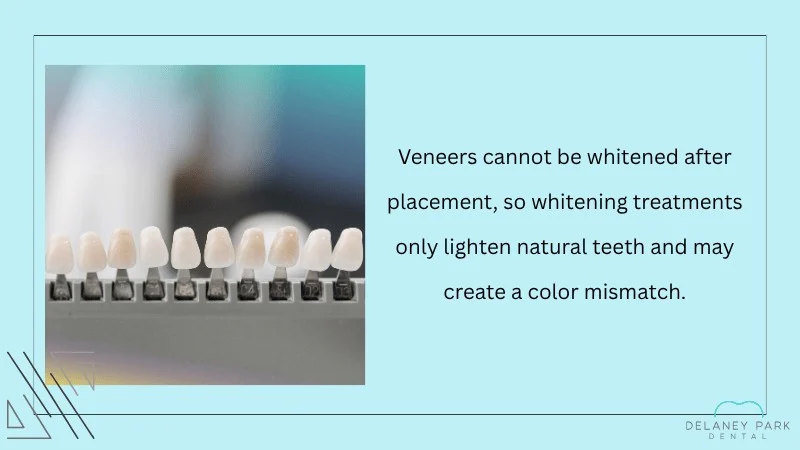
You cannot whiten veneers after they’re placed on your teeth.
Veneers don’t respond to traditional whitening methods because they’re made from porcelain or composite materials that resist the chemical bleaching agents used in whitening treatments.
The color of your veneers is permanent from the day they’re bonded to your teeth. Whether you have porcelain veneers or composite veneers, the material won’t change shade when exposed to hydrogen peroxide or carbamide peroxide gels.
This is why dentists always whiten your natural teeth first, then match your veneers to that brighter shade.
If you try whitening treatments after getting veneers, only your natural teeth will lighten. This creates an obvious color mismatch between your veneered teeth and your natural teeth.
Addressing Stubborn Stains on Veneers
While veneers resist staining better than natural teeth, they can still develop surface stains over time. Coffee, red wine, tea, and tobacco can leave marks on the outer surface of your veneers.
You can remove these surface stains through professional dental cleaning. Your dentist uses special polishing tools and non-abrasive techniques to clean veneers without damaging them.
Regular cleanings every six months help keep your veneers looking their best.
Stubborn stains that penetrate beneath the surface cannot be removed. If your veneers have deep discoloration, your only option is replacement. This is why maintaining good oral hygiene and avoiding staining foods matters even with veneers.
Dealing With Discoloration and Mismatched Shades
Mismatched shades happen when you whiten your natural teeth after getting veneers. Your natural teeth become several shades lighter while your veneers stay the same color. This creates a two-tone smile that looks unnatural.
You have two options to fix mismatched shades. You can replace your veneers to match your newly whitened teeth, which is expensive. Or you can stop whitening and let your natural teeth gradually darken back to match your veneers.
Does teeth whitening work on veneers? The answer is no, so careful planning before veneer placement prevents these shade-matching problems entirely.
Maintaining a Lasting, Bright Smile
Once you combine whitening and veneers, proper care determines how long your veneers last. Good habits protect both your natural teeth and restorations while preventing new stains from forming.
Care Tips for Veneers and Natural Teeth

You need to brush twice daily with a non-abrasive toothpaste to keep both veneers and natural teeth clean. Regular flossing removes plaque between teeth where stains can develop.
Visit your dentist every six months for professional cleanings. These appointments let your dentist check the condition of your veneers and natural teeth. They can spot small problems before they become bigger issues.
Avoid biting hard objects like ice, pens, or fingernails. Veneers are strong but can chip or crack under extreme pressure. If you grind your teeth at night, ask your dentist about a night guard to protect your investment.
Use an alcohol-free mouthwash to maintain oral health without damaging the bonding material. Some mouthwashes with alcohol can weaken the adhesive that holds veneers in place over time.
Preventing Future Staining
Coffee, tea, red wine, and dark berries can stain natural teeth over time. While veneers resist staining better than natural enamel, you should still limit these foods and drinks.
Rinse your mouth with water after consuming staining foods or beverages. This simple step washes away pigments before they settle on your teeth.
Smoking and tobacco use cause severe discoloration. Quitting tobacco protects both your natural teeth and helps your veneers stay bright. Tobacco also damages gum tissue around veneers.
Consider using a straw when drinking dark liquids. This reduces contact between staining beverages and your front teeth. Schedule professional teeth whitening for your natural teeth if they start to look darker than your veneers.
When to Replace or Restore Veneers
How long do veneers last? Porcelain veneers typically last 10 to 15 years with proper care. Some last even longer depending on your oral hygiene and habits.
Watch for signs that veneers need attention. Chips, cracks, or loose edges mean you should call your dentist soon. Dark lines appearing at the gum line might indicate the veneer is separating from your tooth.
Your dentist can often repair minor chips without replacing the entire veneer. Larger damage usually requires a new veneer to restore your smile. The tooth underneath stays protected during replacement.
Color mismatch becomes an issue if your natural teeth yellow while veneers stay bright. You cannot whiten veneers with traditional bleaching, so you might need whitening on natural teeth or new veneers to match.
Other Cosmetic Solutions: Bonding and Invisalign
Dental bonding works well for small cosmetic fixes between teeth. Your dentist applies tooth-colored resin to repair chips or close gaps. Bonding costs less than veneers but stains more easily and lasts only 3 to 10 years.
Invisalign straightens teeth without metal braces. You can combine Invisalign with whitening and veneers for a complete smile makeover. Many people straighten their teeth first, then whiten, and finally add veneers where needed.
Combining bonding with whitening creates natural-looking results for minor imperfections. Your dentist matches the bonding material to your newly whitened teeth. Talk to your dentist about which combination of treatments fits your goals and budget best.
Frequently Asked Questions
Many people have questions about how whitening treatments interact with veneers and when to schedule each procedure. Understanding the limitations of porcelain and composite materials helps you make better decisions for your smile.
Can I whiten my teeth if I already have veneers, and will the color match?
You can whiten your natural teeth even if you have veneers, but the results won’t match. Traditional whitening treatments don’t work on veneers because porcelain and composite resin don’t respond to bleaching agents the way natural tooth enamel does.
If you whiten your natural teeth after getting veneers, your real teeth will become brighter while your veneers stay the same shade. This creates a noticeable color mismatch in your smile.
The veneers will appear darker or more yellow compared to your newly whitened teeth. This uneven appearance is why most dentists recommend completing all whitening treatments before you get veneers placed.
Should I whiten my natural teeth before getting veneers, and how far in advance?
Whitening your teeth before getting veneers allows your dentist to match the veneer shade to your brightest natural tooth color. This ensures a seamless look across your entire smile.
You should complete your whitening treatments about two weeks before your veneer appointment. This gives your teeth time to settle into their final shade after whitening.
Your tooth color can shift slightly in the days following a whitening treatment. Waiting two weeks ensures your dentist selects the most accurate veneer shade for a lasting match.
Why do dentists sometimes advise against veneers for certain patients?
Dentists may recommend against veneers if you have certain oral health issues that need treatment first. Active tooth decay, gum disease, or teeth grinding can compromise how well veneers bond and how long they last.
People who clench or grind their teeth heavily may crack or chip veneers more easily. Your dentist might suggest a night guard or other treatments before moving forward with veneers.
Veneers require removing a small amount of natural tooth enamel, which is permanent. If your teeth are already thin or weak, removing more enamel could cause problems down the road.
What are the safest whitening options that won’t damage veneer edges or bonding?
Professional whitening treatments supervised by your dentist are the safest option when you have veneers. Your dentist can protect the veneer edges and bonding areas during the whitening process.
Gentle whitening toothpastes with low abrasiveness won’t damage veneers but also won’t change their color. These products can help remove surface stains from both natural teeth and veneers without scratching the veneer surface.
Avoid highly abrasive whitening products or charcoal-based toothpastes that can scratch the protective glaze on your veneers. Once this glaze wears away, your veneers become more prone to staining.
How can I fix a shade mismatch between my veneers and the rest of my teeth after whitening?
If your natural teeth become whiter than your veneers, you have two main options to fix the mismatch.
You can either stop whitening and let your natural teeth gradually return to their original shade, or you can replace your veneers with new ones that match your brighter teeth.
Replacing veneers is the only permanent solution if you want to keep your newly whitened smile. Your dentist will create new veneers in a lighter shade that matches your whitened natural teeth.
Professional polishing can sometimes help restore brightness to veneers that have developed surface stains. This won’t change the underlying color but can make them look cleaner and more vibrant.
What can I expect my veneers to look like after 20 years, and how does that affect whitening plans?
Veneers typically last 10 to 15 years before they need replacement, though some can last up to 20 years with excellent care. Over time, the protective glaze on veneers can wear down, making them more susceptible to staining.
Your natural teeth will likely darken or yellow as you age, which can create color differences with older veneers. This means you might need to whiten your natural teeth or replace your veneers to maintain a uniform smile.
Planning for eventual veneer replacement helps you think ahead about whitening. When it’s time to replace your veneers, you can whiten your natural teeth first and then match the new veneers to your desired shade.