Skip to content




When you deal with a badly damaged tooth, you want a fix that lasts. You may wonder if veneers can solve the problem or if you need something stronger. The right choice depends on how much of your tooth is still healthy.
For severely damaged, cracked, or heavily decayed teeth, a crown is usually the better option because it covers and protects the entire tooth.
A veneer only covers the front surface, which works best when your tooth is mostly intact and you want to improve how it looks.
If your tooth has a large filling, a root canal, or deep decay, a crown can restore strength and function. If damage is minor and mostly cosmetic, a veneer may be enough.
Knowing the difference helps you choose a treatment that protects your smile for years.
Key Takeaways
- Crowns protect and strengthen teeth with major damage or decay.
- Veneers improve appearance when the tooth is mostly healthy.
- The right option depends on tooth condition, cost, and long-term care.
Table of Content
- Understanding Veneers and Crowns
- Tooth Preparation and Restoration Process
- When to Choose Veneers or Crowns for Damaged Teeth
- Benefits and Drawbacks of Each Treatment
- Materials, Cost, and Maintenance Overview
- Frequently Asked Questions
Understanding Veneers and Crowns
Veneers and crowns both improve how your teeth look and function, but they work in very different ways. One mainly changes the front surface for appearance, while the other covers and protects the entire tooth.
What Are Dental Veneers and Crowns?
Veneers are thin shells that bond to the front of your tooth. Dentists often use them to fix chips, stains, small gaps, or minor shape issues. They usually remove a small amount of enamel from the front surface before placing the veneer.
Dental Veneers focus on appearance more than strength. They work best when your tooth is mostly healthy but needs cosmetic improvement. If your tooth lacks enough enamel, a veneer may not bond well.
Dental crowns cover the entire tooth, not just the front. Dentists shape the tooth on all sides so the crown can fit over it like a cap. Crowns restore both strength and function.
If your tooth is cracked, badly worn, or has large decay, a crown often gives better protection. Veneers improve appearance, while crowns protect and reinforce weakened teeth.
Types of Veneers: Porcelain vs Composite
You can choose between porcelain veneers and composite veneers.
Porcelain veneers are thin, custom-made shells created in a dental lab. They resist stains better than composite and often last longer. They also reflect light in a way that closely matches natural teeth.
However, porcelain usually costs more and often requires two visits. The dentist prepares your tooth, takes impressions, and places the final veneer later.
Composite veneers use tooth-colored resin applied directly to your tooth. The dentist shapes and hardens the material in one visit in most cases.
Composite costs less than porcelain, but it may stain or chip more easily over time. Many patients choose porcelain for long-term cosmetic veneers, especially for front teeth.
Types of Crowns: Porcelain, Metal, Zirconia, and Ceramic
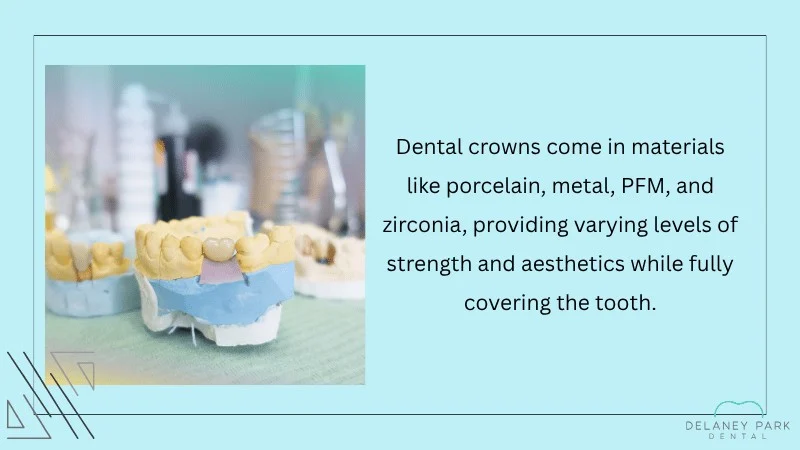
You have several options when choosing crowns, and each has clear benefits.
Porcelain crowns and ceramic crowns match the color of your natural teeth. Dentists often use them on front teeth where appearance matters most. They blend well but may not be as strong as metal in high-pressure areas.
Metal crowns use gold or other alloys. They rarely chip and handle strong biting forces well. Dentists often place them on back teeth where strength matters more than appearance.
Porcelain-fused-to-metal (PFM) crowns combine a metal base with a porcelain outer layer. They offer strength from metal and a tooth-colored look on the outside.
Zirconia crowns are very strong and tooth-colored. Many dentists use them for both front and back teeth because they balance durability and appearance.
The key difference remains coverage: veneers cover the front surface, while crowns fully encase the tooth.



Tooth Preparation and Restoration Process
The way your dentist prepares your tooth plays a big role in comfort, strength, and long-term results. Veneers and crowns both improve damaged teeth, but they differ in how much of your natural tooth they change and how they restore it.
Enamel Removal and Tooth Reduction
To place either option, your dentist must reshape your tooth. This step is called tooth preparation, and it often includes enamel removal and tooth reduction.
Enamel removal means shaving down part of the outer layer of your tooth. Enamel does not grow back, so this step is permanent. The amount removed depends on the type of restoration.
With veneers, your dentist usually removes a thin layer from the front surface. With crowns, the dentist reduces the tooth on all sides and the top. This creates space for the crown to fit over the entire tooth.
If your tooth has decay or large fillings, your dentist may remove weak areas first. In some cases, they build up the tooth with filling material before placing the final restoration.
Veneers Application: Minimal Tooth Alteration
Veneers work best when your tooth is mostly healthy but has cosmetic damage, such as chips or stains. The goal is minimal tooth alteration while improving appearance.
Your dentist removes about 0.5 mm of enamel from the front of the tooth. This roughens the surface and creates room for the veneer. Veneers cover only the front surface, not the entire tooth.
After shaping the tooth, your dentist takes impressions. A dental lab creates a thin porcelain or composite shell that matches your natural teeth.
At your next visit, the dentist bonds the veneer to your tooth with strong dental cement. A curing light hardens the adhesive and locks the veneer in place.
Crown Placement: Tooth Restoration Methods
Crowns focus on strength and full tooth restoration. They cover the entire visible part of your tooth, from the gum line up.
Your dentist reduces the tooth on all sides to make space for the crown. This step often involves more tooth reduction than veneers. If your tooth is cracked, badly decayed, or has large fillings, a crown provides better support.
In many cases, you receive a temporary crown while the lab makes the final one. This protects your prepared tooth and helps you chew normally.
Crowns offer full coverage and added support. Once ready, your dentist cements the permanent crown in place, restoring both function and shape.
Book your consultation today to compare veneers and crowns for damaged teeth.
When to Choose Veneers or Crowns for Damaged Teeth
You choose veneers or crowns based on how much damage your tooth has and what you want to improve. The right option depends on strength, appearance, long-term goals, and what your cosmetic dentist sees during dental checkups.
Who Is a Good Candidate for Veneers?
You are a good candidate for veneers if your teeth are mostly healthy but have cosmetic flaws. Veneers work best when you want to fix color, shape, size, or small chips on front teeth.
Many dentists explain that veneers suit teeth that are strong but need visual improvement. They are often used to correct stains, minor gaps, and slight misalignment.
Veneers require only a small amount of enamel removal. This makes them a more conservative cosmetic dental treatment than crowns.
You may qualify for veneers if you have:
- Small chips or worn edges
- Stains that whitening cannot fix
- Slightly uneven or misshaped teeth
- Good gum health
If your tooth has a large filling, crack, or deep decay, veneers may not offer enough support. Regular dental check-ups help confirm if your tooth structure is strong enough for this option.
When Are Crowns Recommended?
You should choose crowns when your tooth is weak, cracked, or heavily filled. Crowns cover the entire tooth and add strength.
A crown acts like a cap that protects what remains of your natural tooth. Dentists often recommend crowns after root canals or when a tooth has large areas of decay. Crowns are the better choice for significantly damaged teeth.
Crowns are also common for:
- Teeth with large fractures
- Severe wear from grinding
- Teeth supporting dental bridges
- Implants that need a visible tooth replacement
Crowns cost more than veneers in many cases because they cover the full tooth and may require more preparation. Still, they provide more structural support.
If you want long-term strength, especially on back teeth that handle heavy chewing, crowns usually make more sense.
Veneers vs Crowns for Front Teeth

You often face this choice with front teeth since they show when you smile.
If your front tooth is healthy but stained, uneven, or slightly chipped, veneers for front teeth usually create a natural look. They cover only the front surface, which keeps more of your original tooth intact.
Many cosmetic dentistry plans use veneers to improve smile symmetry.
If the front tooth has deep cracks, large fillings, or major damage, a crown may protect it better. Crowns fully encase the tooth, which can prevent further breakage.
Veneers are best for cosmetic concerns, while crowns are used when structure is compromised.
Your cosmetic dentist will check bite pressure, enamel thickness, and gum health before making a recommendation.
Smile Makeover Considerations
A smile makeover often combines several cosmetic dental treatments. You may use veneers on some teeth and crowns on others.
For example, you might place veneers on visible front teeth and crowns on teeth with heavy damage. If you are missing teeth, your plan could also include dental implants or dental bridges to restore function.
During dental checkups, your dentist will review:
- Bite alignment
- Gum condition
- Bone support
- Existing fillings or restorations
You should also think about budget and long-term maintenance. Crowns cost more in some cases, but replacing a failed veneer on a weak tooth can cost more over time.
A skilled cosmetic dentist will match treatment to your goals, whether you want subtle changes or a full smile makeover.
Benefits and Drawbacks of Each Treatment
When your tooth is badly damaged, you need more than a cosmetic fix. You need to know how much tooth structure stays in place, how strong the repair will be, and how long it may last under daily use.
Pros and Cons of Veneers
Veneers are thin shells that bond to the front of your tooth. Dentists often use them for stained, slightly chipped, or mildly worn front teeth.
One major benefit is that they preserve more of your natural tooth. The dentist removes a thin layer of enamel, often less than what a crown requires. This makes veneers a more conservative option for teeth that are still mostly healthy.
Pros of veneers:
- Less removal of tooth structure
- Natural look, especially on front teeth
- Good option for cosmetic changes
Cons of veneers:
- Do not cover the entire tooth
- Not ideal for severely cracked or weak teeth
- Can chip under high bite pressure
If you ask, “how long do veneers last?” most porcelain veneers last about 10 to 15 years with good care. Strong biting, grinding, or chewing hard foods can shorten that time.
For teeth with deep cracks or large fillings, veneers often do not provide enough support.
Advantages and Disadvantages of Crowns
Crowns cover the entire tooth, not just the front. This full coverage makes them a better choice when your tooth has major decay, a large fracture, or a root canal.
Dentists often recommend crowns for teeth that are already weak. Crowns protect and strengthen teeth that cannot handle normal stress on their own.
Advantages of crowns:
- Full protection around the tooth
- Strong support for cracked or broken teeth
- Better for teeth with large fillings or after root canal treatment
Disadvantages of crowns:
- More enamel removal
- Higher cost in many cases
- May require buildup if much of the tooth is missing
Crowns can last 10 to 15 years or longer, depending on material and care. Because they cover the whole tooth, they often handle daily chewing forces better than veneers.
Veneers vs Crowns: Bite Pressure and Longevity
Your back teeth handle strong bite pressure every day. Even your front teeth deal with force when you bite into firm foods.
Veneers work best when your tooth is stable and your bite is balanced. They bond to enamel, but they do not reinforce the inner part of the tooth. If you grind your teeth or clench at night, veneers may crack or loosen over time.
Crowns manage bite pressure more effectively because they wrap around the tooth. This design spreads force across the entire surface. It also reduces the risk of further splitting in a weakened tooth.
If your tooth is severely damaged, strength often matters more than appearance alone. In those cases, crowns usually provide longer-lasting protection under daily bite pressure.
Materials, Cost, and Maintenance Overview
The material you choose affects strength, appearance, price, and long-term care. You need to balance durability with cost, especially when you treat severely damaged teeth.
Porcelain vs Composite Materials
You will often choose between porcelain veneers and composite veneers for front teeth. Porcelain resists stains and reflects light in a way that looks close to natural enamel.
Dentists usually remove a thin layer of enamel for porcelain veneers. They last about 10 to 15 years with proper care. If you wonder how long do veneers last, most fall within that range when you brush, floss, and keep regular dental check-ups.
Composite veneers use tooth-colored resin. Your dentist can place them in one visit, and they cost less upfront. However, they stain more easily and often last 5 to 7 years.
For severely damaged teeth, veneers only work if enough healthy tooth remains. If the tooth is cracked or weak, a full crown gives better support.
Porcelain-Fused-to-Metal and Advanced Crown Types
When a tooth has major decay, a fracture, or a root canal, you usually need a crown. Crowns cover the entire tooth and restore strength.
Porcelain crowns and ceramic crowns (such as zirconia or E-max) provide a natural look. Dentists often use them for front teeth because they match surrounding enamel well.
Porcelain-fused-to-metal (PFM) crowns combine a metal base with a porcelain outer layer. The metal adds strength, which helps on back teeth that handle heavy chewing. Over time, you may see a dark line near the gum if the gums recede.
Your dentist removes more tooth structure for crowns than for veneers. In return, you gain full coverage and better protection for a severely damaged tooth.
Costs and Insurance Considerations
Costs vary by material, location, and how complex your case is. Veneers often cost less per tooth than crowns, but they usually fall under cosmetic treatment.
Many insurance plans cover part of a crown if you need it for decay, fracture, or after a root canal. Insurance rarely covers veneers unless you place them for structural reasons.
You should also factor in future replacement. A lower upfront cost does not always mean lower long-term cost if you need repairs sooner.
Longevity and Care Tips
Most porcelain crowns last 15 to 20 years with good care. Porcelain veneers usually last 10 to 15 years. Composite veneers often need replacement sooner.
You protect your investment with daily care:
- Brush twice a day with fluoride toothpaste.
- Floss once a day.
- Avoid biting ice, pens, or hard candy.
- Wear a night guard if you grind your teeth.
Regular dental check-ups matter. Your dentist checks the fit, the gum health, and the bite.
If you treat severely damaged teeth, you must also protect the remaining natural structure. Good hygiene and routine visits help you avoid new decay around the edges of crowns or veneers.
Frequently Asked Questions
Choosing between veneers and crowns depends on how much of your tooth is damaged, how long you want the fix to last, and how much you want to spend. The right option also depends on whether you need strength, cosmetic change, or both.
When is a crown a better choice than a veneer for a badly damaged tooth?
You should choose a crown when your tooth is cracked, weak, or has a large filling. A crown covers the entire tooth and adds strength.
If you had a root canal, deep decay, or major break, a crown usually works better. Dentists often recommend crowns when a tooth needs full protection, not just a cosmetic fix.
Veneers only cover the front surface. If most of your tooth structure is still healthy, a veneer may work. But for severe damage, a crown gives better support.
Which option tends to last longer over time, veneers or crowns?
Both can last many years with good care. Porcelain veneers often last 10 to 15 years. Crowns can last 10 to 20 years, and sometimes longer.
Crowns may last longer when the tooth underneath is badly damaged. They protect the full structure, which lowers the risk of fracture.
Your habits matter. Grinding, biting ice, or poor brushing can shorten the life of both.
How do veneers, crowns, and bonding compare for repairing chipped or worn teeth?
Bonding works well for small chips or minor wear. Your dentist places tooth-colored resin and shapes it in one visit. It costs less, but it stains and wears down faster.
Veneers work better for front teeth with stains, small chips, or uneven shape. They improve appearance but do not strengthen the whole tooth.
Crowns work best for large chips, heavy wear, or weak teeth. They fully cover the tooth and restore strength and function.
What’s the typical cost difference between veneers and crowns?
Veneers often cost between $925 and $2,500 per tooth, depending on the material and your location. Composite veneers cost less than porcelain.
Crowns usually cost between $1,000 and $3,500 per tooth. The price depends on the material, such as porcelain, ceramic, or metal.
Insurance may cover crowns when you need them for damage or decay. It rarely covers veneers if you choose them only for cosmetic reasons.
What can happen after 20 years of having veneers?
After 20 years, your veneers may show wear, small cracks, or edge staining. The bonding cement can weaken over time.
Your gums may also change position, which can expose the edge of the veneer. That can affect how your smile looks.
Many people replace veneers after 10 to 20 years. Your dentist will check for decay under the veneer and make sure the tooth stays healthy.
Are the “Turkey teeth” makeovers usually crowns or veneers?
Many “Turkey teeth” makeovers use crowns, not veneers. Some clinics shave down the teeth heavily and place full crowns on many teeth at once.
Veneers require less tooth removal in most cases. Crowns involve shaping the entire tooth, which removes more enamel.
If you are considering treatment abroad, ask whether you are getting veneers or crowns. The long-term impact on your natural teeth can differ a lot.